Pages

Showing posts with label 1 star movie. Show all posts

Thursday, September 12, 2019

Body at Brighton Rock

Mild spoilers.

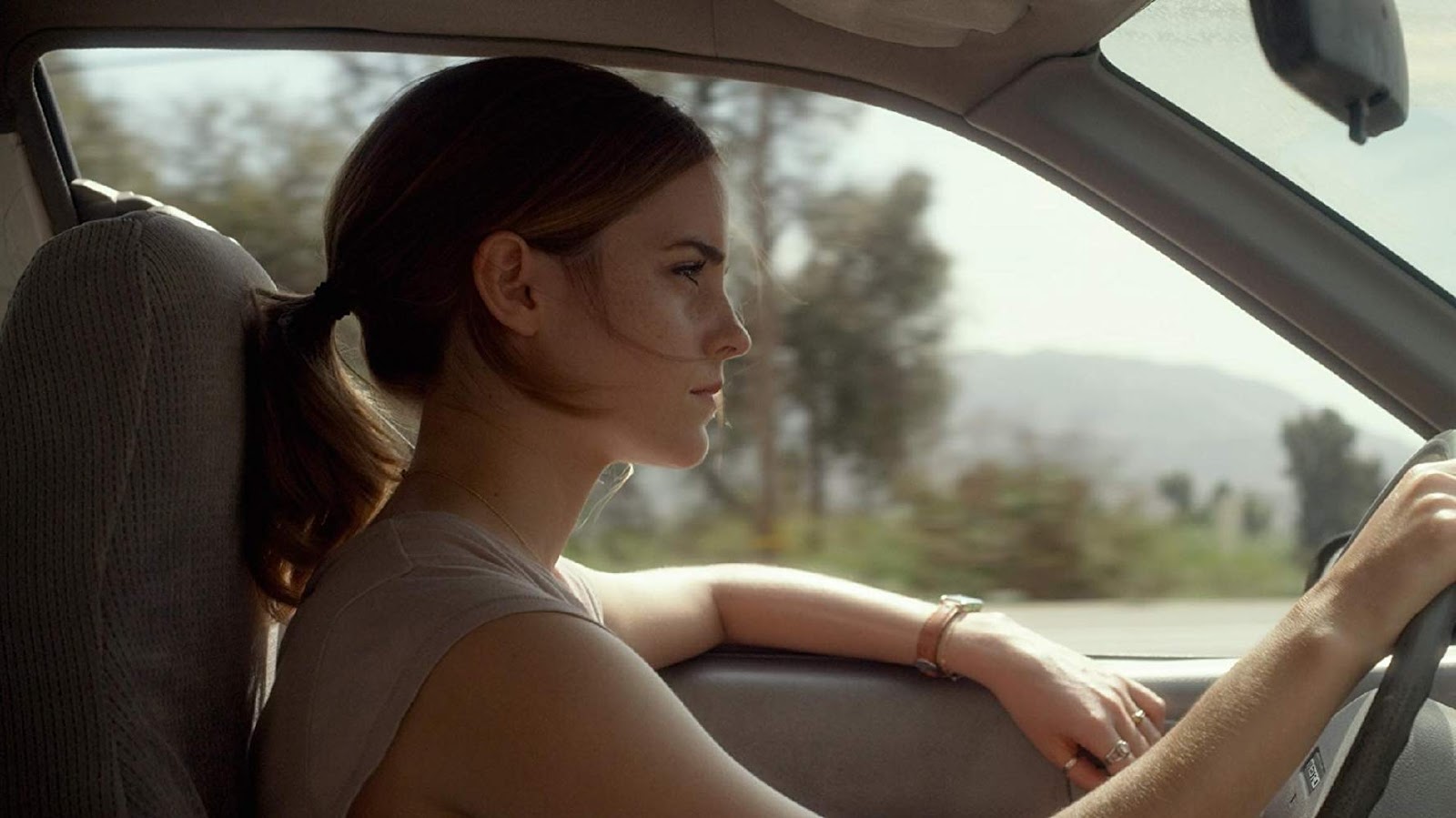
And now for possibly the worst movie of 2019. It's sad to say, because I like to see these indie flicks so I can recommend them and maybe get them bigger audiences. If I had known how bad it was going to go, I wouldn't have watched it at all; but now that I have, I can't let its strange offenses pass by unchecked.

It starts out so normal...

Wendy is an inexperienced park ranger who gets herself into trouble by switching duties with her friend so she can flirt with another employee. Now instead of manning an info desk, she's out in the wild, and soon enough, lost. Then she finds a dead body. A creepy, decaying one. The guy on the radio says she has to stay there overnight until they can come and find her, but she's worried about bears... and the gross dead guy... and that one weird living guy who she ran into. It's going to be a long night.

For her and for us. The movie isn't an hour and a half dripping wet and with the credits included but is still packed with filler, including two nightmare sequences, and a full song-length sequence where she dances down the trail pre-getting lost. Actually, the dancing might have been my favorite part of the movie. Point is, the script has no meat on it at all. And then the things that need to happen (like her getting lost) take way too much time and/or are contrived into oblivion. One instance of bad luck I can handle, but each repeat adds to the irritation, and everyone knows about the straw that broke the camel's back.

I feel like I lasted an admirable amount of time. 

For me the final straw was when night falls and she begins having nightmares in which the dead body turns zombie. This movie is rated R, but up until that point the movie had been nearly Hallmark levels of upbeat and family-friendly. The only thing that would hint at future horrors was moments in which suspense would build (she hears a noise or finds claw marks on a tree) that ends with nothing happening. I think the idea was to build suspense in a constant fashion until the true threat arrives, but they instead built suspense in short bursts which would relieve.

The result is not only ineffective in the long run, but also maddening in the short term as each individual moment of suspense is worthless to the story on its own. Arguably the zombie isn't though; at that point it's used to give Wendy an opportunity to face her fears and prove herself; but as it's only a dream it's hardly impressive of her, and doesn't prove her any more capable of surviving the woods than she was before. That would be like me managing to sleep alone after Hereditary and claiming that experience would help me survive a demon-possessed death cult.

She tells the body "I'm not afraid of you!" and she's magically not afraid anymore. 

Being brave is nice, but she was that either way, for spending the night there. After that, the movie goes even more off the trail than turning into a full-on zombie horror film, with ridiculous and insensible things that I will not divulge for spoilers. Maybe the idea was to subvert expectations (a little late for that trend, it's dead already) because when the movie started out with Wendy arriving late to morning orientation, trying to sneak in, and getting caught with a sarcastic "Nice of you to join us!" I figured the movie had its cards on the table.

But it tried to move away from those cliches, attempting to explore some thematic places that it is simply not equipped to (just like Wendy!) and fumbling its way through without tact or understanding (just like Wendy). It throws out ideas that in competent hands might have become compelling, but with inexperienced handling are disjointed, ADHD sketches. I do always like when a movie's aura reflects that of its protagonist... but mirror her good qualities, like her quirky charm, instead of the shortcomings she's supposed to overcome.

If this movie isn't absolutely stupid, it certainly fooled me. 

Body at Brighton Rock is barely even a cohesive story. A spectacular feat, considering how simple and foolproof its premise was. Probably that was the root of its problem; that simplicity wasn't enough to make a feature-length film, so they padded it out with distracting, half-baked -- no, raw dough -- ideas that only tore down what little good they had. What a kerfuffle. Like Wendy, I'm just glad it's over.

Saturday, January 26, 2019

The Circle

Major Spoilers.

Is this movie trying to be what it appears to be trying to be -- a movie about a good idea taken too far -- or is it trying to be what it is -- the most disturbing and effective anti-technology, anti-mob-rule, pro-personal freedom horror movie I've ever seen?

It's a tough call, but to say it meant to be as horrifying as I found it would be to give it more credit than I'm willing to attribute...

What I expected based on the trailer and critical reception was a technology-cult movie, starring Emma Watson, with Tom Hanks as the seemingly-nice but really rather evil cult leader, and supported by John Boyega and Karen Gillan, that turns into an espionage-esque thriller in the end, a la Eagle Eye or Enemy of the State. Avoid-the-surveillance-to-save-the-world kind of deal. That wasn't it at all.

So here's what really happens: Mae (Watson) starts the film with a friend from her neighborhood, Mercer (Ellar Coltrane) who's notoriously off the grid and opposed to using social media. Mae gets an enviable job at The Circle, which essentially combines all social media and internet-things into one interface. She lives on-campus, and is strongly encouraged (and passive-aggressively peer-pressured) into taking part of the social media interaction with co-workers. It basically part of the job to be socially active in the community.

There was an underlying "off" element to it that was intentional. By the end I had no clue what it meant by it.

In her effort to further her popularity in this community, she shares a photo of a deer-antler chandelier Mercer made for everyone to appreciate. Next thing you know, he comes to her work to complain that he's received a plethora of hate-mail including even death threats from her followers, accusing him of being a deer-murderer. He doesn't kill the deer himself, it's hurting his business, and it's making him much more web-present than he's comfortable with. As they talk and she apologizes (she had no idea that would be the outcome) Circle community members gather around them, filming with their phones and calling him "deer killer" to his face. The scene is unsettling to say the least. But... casually.

Soon after, despite her thinking it all odd, and despite making friends with John Boyega, who it turns out, invented the interface and hates what it's being used for, she slips further and further into the social aspect, until, one day, for no determinable reason (or maybe I just can't remember) she does a thing called "going fully transparent" in which she wears a live-streaming camera on her shirt 24/7. This rockets her up in popularity, alienating her friendship with Annie (Gillan) who got her the job in the first place. She starts going to board meetings and participating in the furthering of the business.

One second she's scoffing at it, the next she's more involved than anyone.

A few ideas later, she's giving a presentation to the community, in which, because of the size that Circle users and her "fully transparent" stream-watchers has grown to, she makes an experiment. Can her millions of followers with their cameras track down a fugitive from justice? She starts a timer and it takes them ten minutes to locate and arrest an escaped convict. Then she asks for a suggestion from the crowd: who else should they find? Mercer, they say. She says no. They start a chant. Tom Hanks intervenes, and "encourages" her to give them what they want. Fine. She starts the timer, and less than ten minutes later, Mercer is dead; following a car chase with phone-wielding busybodies.

After that Mae goes home for a while to reevaluate her life. What was wrong with The Circle that it caused such a tragedy? Four days later she returns, goes full transparent again, and using her smarts and the pressure that her great following endows her with, essentially forces Tom Hanks (And Patton Oswalt? For some reason?) to join her in her full transparency, having already hacked their emails (even the super-duper-ultra-secret ones) and sent them out for the whole Circle community to see. The film ends with her having assumed control over the whole company by power of popularity alone, and revealing plans to force the whole world into participation and transparency.

Because people behave better when they're being watched; because secrets are lies; because withholding information from people is equivalent to stealing from them, and because participation in society is vital. Wow. For a moment, as the upbeat pop music played over the colorful pastel palate of the credits, I was downright angry. Then it occurred to me: perhaps that was the intention. If not for the upbeat credits and my conviction that Emma Watson would have never agreed to play that character if she saw her how I saw her, I might be fully convinced.

There's NOTHING this movie says that I agree with. I can't figure out what was meant sincerely and what wasn't!

So much sits so wrong, not just the part where she caused her friend's death and then doubled down on the promotion and distributing of the tool used to bring about his demise. She outs Hanks by force, and we the audience are never even told of anything he did wrong. Her friendship with Annie is repaired by Annie, when she quits her job and returns to the simple life in Scotland. She seems finally happy. Mae is happy for her. Then she immediately goes on with her final plan. She even plans forced participation in voting. And none of these things are argued against except that they will make you sick to think of them.

What I most found disturbing though, was the talking points that secrets are lies, (there's no rebuttal to that portrayed) and that not sharing an experience you've had with someone is really stealing from them. That's why Mae goes full transparent actually (there, I remembered). After she confusingly breaks the law to go kayaking at night, tips over and is only rescued because of surveillance cameras, she realizes that people wouldn't break the law if they were watched constantly, but even more importantly, realizes that because she didn't film her kayaking experience and share it with people (particularly those who are incapable of doing such a thing) she was selfishly stealing from them.

So, this movie says (and never offers a counter to this argument), if you watch a sunset, and don't take a picture for your Instagram feed, you're actually stealing from every person who would have seen it. The movie says this with such a serious, literal, "theme vocalized" tone that I'm having a hard time believing it meant it any other way. Based on the tone I picked up, it seems completely like the movie's intention was to show the ups and downs of technology, but ultimately to show how it's more good than bad. It succeeds in doing the opposite; but only by being terrible at doing the first.

The worst movie ever.... and it reads like prophesy.

Maybe the intention was to turn it all into the most subtle horror story of all time. Even then it's just plain bad. The plot is too convoluted, events are forced and senseless, the acting is terrible, the characters either bland (Mae) or wildly underused (everyone else) and it's completely lacking in style. It has the style of your average bland romantic dramedy, but there's no romance and the drama is sci-fi horror played like simple drama. Mae's actions are impossible to characterize or get behind, yet she's ever presented like a true heroine.

Perhaps two years ago when it was made it did come across as more extreme and obviously presenting a bad scenario, in which technology is used to destroy lives only to be further embraced for the damage by the masses -- but today it almost sounds... genuine. And that's the scariest thing of all.

Monday, April 17, 2017

Me Before You

Major Spoilers!

Before I begin, I want to make two things very clear. 1: I did not pay to watch this movie. I would never do that. And 2: My motivation for watching it was so that I could confirm its status as a miserable, wilting pile of BS. Well -- BS confirmed.

Thanks JoJo moyes for inspiring me to write something better -- like this sentance. It has spelling and grammatical errors, but I'm not going to fix it to make a point about the height of the bar you set.

I knew it was, because I read the book (I was super, naively, embarrassingly unwitting to what it was), and since the movie is exactly like the book, I now have a nice opportunity to go on a ranting rampage and get a few things off my chest. So in case you're ignorant to this story, here it is in a nutshell. Girl () is hired by rich parents ( and ) to be a sort of care-giving companion to their previously wild playboy son () who was hit by a motorbike and now is a quadriplegic (basically he can move his head, and his fingers enough to drive his wheelchair). Girl and boy develop friendship, improve each other's lives, fall in love. Boy commits assisted suicide with the support of girl and parents. Isn't that so sweet? You're probably bawling already from the tragic romantic beauty of it all.

So the movie spends most of its time and more than most of its effort in trying to justify the suicide (still never sticking to one argument long enough to see it through, but more on that later) but in the beginning, before Clark learns of Will's intentions, there are a few events to keep one entertained. The growing friendship and the mutually improved lives were by comparison, well done, and bolstered by the movie's visual aspect which featured a lot of good-looking people wearing pretty clothes and surrounded by pretty, well filtered locations.

That's in the center. And is Clark's sister -- a pointless role outside of the book.

But the movie is torn between improving Will's life and making it tragic so that the end "works." He gets to spend all day being waited on, watching movies, listening to music, and rolling through beautiful English countryside, and his loving parents are rich and doting -- but no, his life is miserable. Examples? Well, he used to be a daredevil, and has explored places and done things that most would only dream of. Sounds like he was lucky to be able to do those things before the accident. He also had a girlfriend () who is now engaged to his old best friend and it's super awkward. But he attends their wedding and she makes a point of thanking him for coming. She also implies to Clark that the reason they broke up was because he pushed her away. I dunno y'all; it's an unfortunate situation, but she sounds like a decent girl.

On the flip side, Clark has her own boyfriend (), a fitness-obsessed, bit-of-a-doofus kind of guy you know is gonna be gone by then end. But again, there's really nothing wrong with him. He's just ignorant to Clark's wishes, like, he plans a holiday that he wants to do, which she pretends to be excited about! And then we're supposed to hate him for not understanding her? She won't tell him what she thinks about anything, so of course he thinks everything is fine. Then he starts getting jealous of Will, which, considering the romance that blooms later is totally justified. They finally break up and I feel more relieved for him, poor fellow.

At the wedding, Clark sits on Will's lap and they "dance" to shock the snobby crowd, but we are never given any reason to think they are snobby except that they're rich. And Will's rich too. And Clark...

Clark all by herself is just as confusing, and is also, I think, the movie's one casting flaw. Everyone else has pathetic or underused characters but is still a bunch of talented, well put-together and probably highly paid actors who got to phone in decent performances. Emilia Clarke acts by wiggling around her very flexible eyebrows, and misses the mark on a pretty cliched lead character. Bubbly, optimistic, fashion-brave, care-free Clark comes across as a self-righteous snob who will insult employees for doing their job. She plays everything like a comedy bit, and couldn't capture any semblance of genuineness. Oddly, most off was her singing. She sings like a mouse. Bad singers who don't care just let it out -- especially with a silly song like that.

On to the main event. So Clark discovers that Will has made an agreement with his parents to stick around for six months and then they'll let him kill himself. Will's mom still hopes he'll change his mind and she and Clark plan adventures and trips to try and make him see that life isn't so bad, the final trip being a vacation to some expensive resort on a tropical island. On these trips Will pushes Clark out of her comfort zone in ways she never could have dreamed, let alone had access to without him. On their last night in the tropics, he tells her that he was never happier than in those past six months, and then he casually invites her to come to the suicide resort with him.

And then they have a nice giggle about it and smile way too much to mask the fact that this movie is sick and disturbing.

First of all, WHAT?? If he doesn't want to die because he's unhappy then why does he want to die? Clark and others offer feeble arguments to all his reasoning, but none of the arguments are seen all the way through, because their natural conclusion is that he shouldn't kill himself. DUH. Unhappy? No, admittedly he is happy now. Quality of life? Granted, it's not at the extreme heights it was before, but he's still wealthy and surrounded by people who love him. Killing yourself because you can't skydive or windsurf anymore sounds more than a little petty and selfish. Very few fully able people have that kind of quality of life. Also he admits that the playboy him was a jerk and never would have given Clark a second look; seems like the accident made him a better person in the end. Then he says he wouldn't be able to stand being in a relationship with her without being able to have sex, which is also pretty petty, but I'll give him that one -- he should break up with her if that's how he feels. Suicide is maybe overkill in that scenario.

It seems to me that the only reason he has to kill himself is because he's disabled, not because the disability affects his life in any kind of significantly negative way. But the movie can't say that because it's evil and untrue. So they make up excuses.

So she's devastated because she thought she had changed his mind, and oh yeah, she's in love with him now, so she goes home and mopes... but then comes around before it's too late and they make up, with him on what will be his death bed. The argument the movie settles on -- for the sake of the romance -- is that he loves Clark so much he wants her to go live her life without him holding her back. So before he kills himself he creates an itinerary of adventure for her to complete after he's gone and gives her some money to "buy her freedom." The end of the film shows her sitting at a cafe in France, reading his final letter. Alone.

Look at her: doesn't she look happy as she sits there ALL BY HERSELF READING THE WORDS OF THE MAN SHE LOVED WHO KILLED HIMSELF SO SHE COULD GO SIT ALONE??????

BS, honest and simple. There's no angle to look at this pile of crap that makes it even faintly resemble a beautiful, inspiring butterfly, but that's what we're constantly told it is. Are we really supposed to believe that her newfound capacity for travel is supposed to replace a relationship with a human being? It what world is her life better because she got to go to Paris alone? (And by the way, what exactly was it that stopped his going to France? Oh yeah, he wanted to be there as his old self... the playboy jerk who loved no one.) No -- her life was better because of him; it can't also be made better because he's gone. This story painted itself into a corner and stubbornly stuck to its ill-advised propaganda. A literal death grip.

What kind of message is this movie trying to send, anyway? Well obviously it's trying to push the "right to die" agenda and normalize assisted suicide. (I'm on Clark's cross-wearing mum on this point -- it's no better than murder. And also a fundamentally extremely deceitful idea.) But besides that, what does it accidentally imply at the same time? If you're unhappy you should be able to kill yourself. If your quality of life is in any way diminished from what it used to be or what you want it to be, you should be able to kill yourself. If someone loves you and wants to spend their life taking care of you, you're holding them back -- you should kill yourself. And most broadly: Selfish aspirations are more important than personal relationships. Essentially, the title -- you, before anything or anyone else.

Talented actors Charles Dance and Janet McTeer as: Everyone as they realize what they just watched. Also probably: Them regretting their involvement in the project.

I sincerely hope I'm not the only one who noticed all these terrible ideas ingrained in this terrible, miserable movie. Briefly on the technical side: Of course I wasn't watching to enjoy myself or be involved in the story, but I never had to bother with any effort to keep myself from being pulled in. I was never tempted -- never even nudged to be emotionally moved. The movie was stale, unromantic, whitewashed moral excrement. Pooped out by a male cow, and smeared over pages of a book and a screenplay by an ignorant, misguided person armed with an agenda and absolutely no ability in or inclination toward critical thought.

I wish this story would kill itself. We would all definitely be better off without it.