Pages

Showing posts with label Comedy. Show all posts

Wednesday, August 9, 2023

Back to the Future

"Marty! You gotta come back with me!" "Where?"
"BACK TO THE FUTURE!"

The 80's were a great time for movies. But as far as 80's movies that fall solidly under the category of "Fun" and follow a teenaged lead, it's hard to find something truly remarkable. Movies like The Last Starfighter or Adventures in Babysitting may have a winning concept or teen appeal, but then the plots seem to spin their wheels for an hour or so without going anywhere, while the runtime is filled with character antics that grate on your nerves, fluffy, nonstarter side plots, and boring car chases. John Hughes had unique characters and romance, but what about adventure? Danger? High stakes? Back to the Future ticks every box. And it fulfills each category better than its competitors often can even fill one. 

It's easy for me to take things about it for granted. Like Marty, to start. He was established in my brain as that archetype from childhood. 80's teen. Main character. Running around, getting in and out of trouble for our enjoyment. He's the standard I hold others of the kind up to—and yet I've barely considered that's what I'm doing because I knew who and what Marty was before I knew how to define it. He seems so simple and straightforward; but watching this movie and paying attention to his characterization, it's astonishing how many moments are made to serve him. It's a plot movie. Marty is made to have an every-kid feel on purpose. But he's still so established. His life, personal dreams, girlfriend, that almost have no relevance to the time-traveling adventure. And yet, if he were never in a band, we'd never have the show-stopping Johnny B. Goode performance. And that's the best dang scene in the whole movie!

Then give it all to Michael J. Fox to play and I have to check my taking-things-for-granted tendency again. To me, they're one and the same person. And even if Fox is essentially playing himself, his balance of traits is calculated. He's goofy. But, pretty cool, actually. Charming, but with an accidental feel. He can win a beautiful girl, but he hangs out with an eccentric inventor. He's not the popular guy in school, but neither does he have to deal with bullies—unless you count the principal! We easily believe both his dumb, bumbling reactions to events, and his ability to jump into action with confident competence. The likes of Tom Holland have probably lost long hours of sleep over this characterization and how balanced and blended it all is. I think Fox has a lot to do with it. But also the writing can't be ignored. It gives him so much to work with for such a tonally light character. 

And all that being said, my favorite character has long been Crispin Glover's George McFly. What's a transformation! What awful oily hair! What sincere, aching blue eyes! Watching Marty work to gift his parents with a happier, more fulfilled life has always been the highlight of the movie for me. The time travel is the fun part—that allows us to go through the extreme ups and downs of the family drama. George and Lorraine both seem hopeless losers, but all that can turn around in one immaculately set-up, powerful moment—and then seal it with a song, a kiss, and a song—as only a true 80's movie can. After how beautifully and satisfyingly that thread concludes, I often forget that Marty still has to, you know, get back to the future and all that.

The movie really has to go to work on the third act wrapping up because of how many threads it has going. And having each one conclude in ways you don't quite expect (but that make perfect sense because the set-up was there but not projected) really makes the whole last third of the movie feel like a rollercoaster of thrills and heartwarming victory—where the highs are high and the lows are high, too. Even when we're finally allowed to settle, after all the good news is out, it's not long before they're off again, promising more and more in the next movie. Even if you don't go right into the sequel (which I rarely do) the euphoric feeling sticks. How do they do it? How do they make every subplot feel vital—and each payoff feel inevitable and also like beating the odds?

Such an interesting love story because it's not about who loves who, will-they-won't-they, but it comes from a very honest perspective: "These two HAVE to end up together. Here's how." 

All I can figure is that when every detail and facet of your story is important and useful and built upon each other, it hides which ones will be used for the next payoff. Or maybe it's all so extraordinarily entertaining that you look past the moments of set up. Because even if they weren't used to set something up, they were still good moments that elevate, deepen, and give momentum to the story. Not a second wasted. Not a moment falling short. All as a fun 80's scifi teen adventure, with all the life-or-death situations, romance, and chase sequences you could ask for. That, and Doc's wide-eyed crazy expressions, too. I love this movie; and that's one thing about it I could never take for granted.

Sunday, January 1, 2023

The Banshees of Inisherin

Spoiler-free!

Ireland, 1923. As a Civil War takes place on the mainland, a smaller Civil War begins on the secluded island of Inisherin—between two friends. Pádraic and Colm. Former friends now—Colm decides he doesn't want to be Pádraic's friend anymore, and though the squabble may sound like the petty whims of a five-year old, Colm takes his decision seriously. Very seriously. And Pádraic is left to wonder what went wrong.

Written and Directed by Martin McDonagh

McDonagh is one of those directors with a small but incredibly rich filmography. He's made three other feature films besides this one, and each is brimming with a je ne sais quoi that I can only call his "style." All directors have a style, some easier to spot, and some easier to describe. McDonagh's is easy to spot—his movies are dark comedies and involve bizarrely bold plot and character choices—but almost impossible to describe when it comes to the sense he evokes. For me, anyway, which is probably why he interests me so much. I often find myself returning to movies where I felt like I understood it, but then can't prove it to myself in words. I keep coming back until I can. And if I continue this trend, I'll be revisiting The Banshees of Inisherin soon.

It's a more complicated case than McDonagh's previous films though. Putting aside my comprehension skills, I didn't enjoy The Banshees of Inisherin as much as I have his other work. There were sections of the movie that felt like a bad dream, or a horror movie that I wasn't expecting to be a horror movie. There was a terrifying feeling of dread—which I have to admit is a great compliment to the craft and creativity here—that I didn't know what would happen. That doesn't sound scary, typed out. But imagine the most extreme, unnerving feeling of the unknown. Walking through pitch black in your house, thinking you know where you are, but doubting. And then that doubt coming true. That's how parts of this movie felt. And I didn't like it. 

Great location. Wild, beautiful, and haunting. Very appropriate.

From an artistic standpoint, that can't really be anything but a compliment. But I can't judge movies on objective artistry alone, because how a story moves me is important to defining its quality. Yes, this story moved me; but often in a negative way. I felt a lot of emptiness, a lot of sadness, and hopelessness. And as I write this I think back and I think there was supposed to be hope. And certainly there was meaning. And maybe if I just watch it again knowing what is going to happen will allow me to feel those positive elements better, and understand the hope of the story in my heart, not just my head. Maybe, maybe, maybe. 

What I know is objectively great, and what brought out the entertainment of the piece for me was the writing and the acting. There are individual scenes in this movie that achieve a sort of storytelling version of laminar flow—unbroken surface, everything in perfect alignment with everything else, everything working toward the same clear goal. McDonagh's writing skills are masterful, both in characterization, and in dialogue that is like eating an entire platter of a delicacy. Most good movies have one or two bites of such precise work; here they can occur one scene after the other, until it's rare to find a moment that isn't uniquely captivating. 

McDonagh is one of few directors who allow Farrell to be Irish, and it brings out wonderful facets of personality.

The cast falls into this aforementioned laminar flow without disrupting anything, and bring their characters to full, colorful life. Absolute masterclass performances for characterization and brilliant, unforgettable line delivery. Colin Farrell and Brendan Gleeson's easy chemistry is good to watch, and both also give tight, complex performances. Farrell carries the film though, and makes the plot's strange twists and turns feel plausible, bringing out the dark comedy tone. Without him hitting the right notes, this story easily could have felt downright unredeemable. He holds the line between the sincere and the absurd. Smaller standouts are Kerry Condon and Barry Keoghan in supporting roles. I especially loved Condon because her character reflected my feelings in witnessing the story unfold.

Of them all, I was rooting for her the most. And, I think that was intentional. I think Martin McDonagh made me think and feel everything that he intended to. And that deserves accolades. I respect it. And yet, I can't shake the feeling that there's something wrong here. Whether it be some misstep of reason which means the truth of the story is a mistake, or whether it's simply a distaste for the way the truth is exposed—either way, I think it's best if this review goes unresolved. 

Sunday, November 6, 2022

Mrs. Harris Goes to Paris

It's always nice to see a good lead role come around for a talented character actor to take, but it's more than Lesley Manville's winning turn as the larger-than-life title character that makes this twee Paris adventure worth the admiration.

Adapted from the book by Paul Gallico.

Mrs. Harris is a war widow and cleaning lady. She has a slightly sad and woefully average existence, and sentimental, hopeful side that's too big for her circumstances. She decides she wants to go to Paris and buy a Christian Dior dress. She thinks it's meant to be. And maybe it is—her faith is rewarded with some good financial luck, and off she goes. Of course, it's not going to be so easy as to plop down some cash and grab a dress—but neither is it going to be so hard as to not be a fun and airy ride. 

The balance between difficulties that arise and their sometimes magical solutions is what made this movie work as a whole for me. I'm not the biggest fan of twee entertainment simply because there never seems to be real stakes and all the conflict is simple misunderstandings. Pack on top of that characters who only exist to live out the wish fulfillment plot, and the affair turns boring fast. Mrs. Harris skips over that. First of all, she herself is an interesting and three-dimensional character. The people she meets are also more complex than "good guy" or "bad guy" and the movie takes turns in developing them, too. And while some conflict is resolved through luck or "magic" here, that does have a thematic reason, not just resolving things because they need to be resolved. 

Great romantic subplot. But I'll get to that later...

I suppose it is very twee to say that things work out for Mrs. Harris because she's a kind and giving person who reaps as she sows. There is truth in that, but in real life perhaps not quite so overt. At any rate it satisfied both my taste for cozy entertainment, and my critical eye against lazy plotting. Lesley Manville shines in the role, big, warm, and delightful, and could have held my attention alone. She is joined, though, by a large and fleshed-out supporting cast. From her best friend, and her clients at home, to the Marquis in Paris who befriends her, to the dressmakers and models, right down to the politely nervous Air Force officer who brings her one of her bits of luck.

Every cozy adventure needs romance. And no, Mrs. Harris isn't too old for it herself, but a young couple in a movie like this will never be a waste, and in this case, they were my favorite aspect of all. Natasha, model, enormously pretty and face of Dior, who doesn't want the limelight or the job of entertaining top clients. And André, Dior's mild-mannered accountant. It is very much a side plot, but hits every note of the romantic arc with perfect ease simply by setting up the characters the right way. It is brief, and familiar, but full of strong moments that pushed all the right romantic buttons. And I rarely mention something like this, but it's vastly important here, and the best aspect along with Lesley Manville and the two adorable French lovebirds. Costumes. 

I feel like such a girl, but it's true. The costumes were practically a character themselves.

It's a movie about buying a Dior dress, after all. The scene that shows the collection is pivotal, and for more reason than that Mrs. Harris picks out the dress she wants. We get to see it all, as if we're invited to pick our favorites as well. As a girl, it worked on me. Even as a girl who likes story and character more than pretty costumes. The pretty costumes got to me. They were great. Vital. And extended beyond the Dior collection, too. Everyone is dressed with expert attention all the time, fitting and enhancing their character. It's the focus of the movie, which I might raise an eyebrow at in other circumstances, but here it bolsters the production quality, and doesn't get in the way of character or story either. An ideal balance.

So maybe it's not my typical kind of movie in theory—but it turns out that any story can be well-made, hit satisfying beats with well-developed characters, and make itself worth its existence as more than eye candy. Mrs. Harris Goes to Paris is an all-around treat. 

Tuesday, April 19, 2022

Why Didn't They Ask Evans? (2022)

Spoiler-free!

It may be hidden away on Britbox, unlikely to ever be seen by many potential fans, but Hugh Laurie's take on this Agatha Christie standalone mystery may also be my favorite Christie adaptation ever, so I must tell you about it.

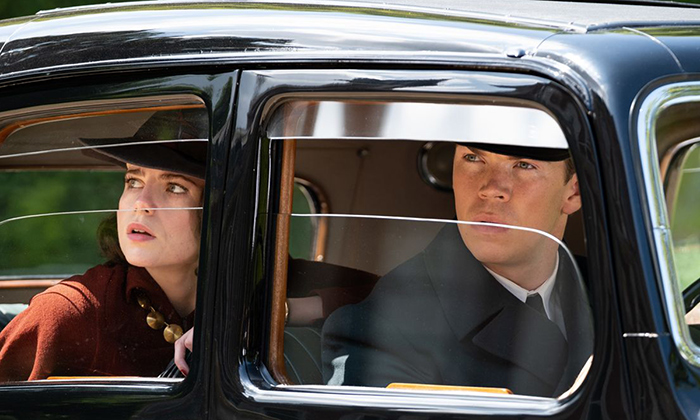
It stars Will Poulter as Bobby Jones and Lucy Boynton as Lady Frances Derwent—and right there you have half the reason why it's so much fun. While out caddying one day, Bobby stumbles upon a man who's fallen over a cliff. Before the man dies, he asks a single question: "Why didn't they ask Evans?" Bobby soon reconnects with his childhood friend, Lady "Frankie" who has a penchant for sticking her nose into situations with the kind of charm and grace that makes it forgivable, and together they are pulled into a thrilling mystery plot as they try and work out who Evan is, and who didn't ask them what.

 Frankie does most of the pulling, and Bobby most of the getting pulled. They make a great team.

Agatha Christie is known for weaving impressive and un-guessable mysteries, but the more I read and watch of her stories, the more I think it's her characters that are the most vital. Why Didn't They Ask Evans? isn't her most memorable work as far as mystery goes, but it still stands out, and is one of my favorites, even before this version came around. The simple intrigue of the central question and the duo of Frankie and Bobby are what make this story shine. Hugh Laurie understood that (he wrote and directed this, plus takes a small but key role), and he puts most of his focus on the two leads. Each of their scenes, even the ones that are just deducing and theorizing, are packed to the brim with wit and banter, great chemistry (thanks to the casting), and a grand sense of fun. 

Laurie's adapting should have poor Kenneth Branagh turning green. For one, Laurie gets three hours to tell the story instead of a movie length, so he gets to indulge in the parts of the story that are the most fun. Mostly characters as previously mentioned, but also the cozy mystery tone. There's a beautiful balance of foreboding and building suspense mixed with light, airy, distinctly British wit and comedy. Every other scene has a line to laugh at, and there's obvious thought put into clever scene construction. The lost art of set-up and pay-off. Laurie also expands some parts of the book into more cinematic sequences that won me over easily despite my tendency to prefer direct adaptation. Laurie's writing and directing sensibilities complement Christie's work rather than conflict with it, and the result is, I daresay, enhancing.

I wish Christie had written more Bobby/Frankie stories so we could get more of Poulter and Boynton together. Totally adorable. 

The only hang-up here is that so much time is spent in fun, cozy sleuthing with the two adorable bantering leads that time runs out and the mystery plot seems rushed once it comes around to the dramatic ending. The dramatic ending doesn't culminate into a grand reveal like when Poirot gathers his suspects and explains everything succinctly. It's more given to us in bite-sized pieces that don't flow like the rest of the story does. Part of that is due to Christie's structure in the book, which isn't her best, but this adaptation deviates most toward the end and loses a little of the explanation she provided. A thread or two is left hanging, and the wrap up happens so fast I was left wishing for five more minutes to revel in the success. 

I get the distinct feeling that the three-hour time limit came due, and Laurie had to choose between wrap up and explanation scenes, and some of those gloriously witty character scenes in the beginning and middle. He chose the character scenes. And as far as I'm concerned, he chose wisely. I'm completely in love with Will Poulter, Lucy Boynton, and this charming little mystery. 

Monday, October 11, 2021

Free Guy

Spoiler-free!

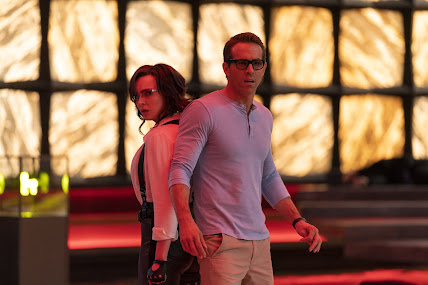
What do you get when you remake The Truman Show but update it for modern day by adding elements of Ready Player One, and a bit of the Groundhog Day concept, and make Ryan Reynolds the lead?

You get a summer movie that actually feels like a summer movie.

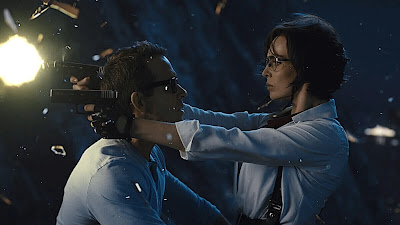
Here's a shocker: this movie isn't two hours of Reynolds running around in a videogame world making quippy jokes. There's like, a story. And stakes. Remember those? There are characters who have goals, and an antagonist who's in their way. And they're the good guys because their goals are moral, and the antagonist is the bad guy because his goals are immoral, and the story is written so that we'll root for the good guys and have a satisfying sense of resolution if they succeed.

"No duh, Sarah, that's how movies work." Yep. It's weird. I wish I could say I wasn't starstruck by a mere coherent plotline, but here we are. And I know it's not only me. "It's deeper than I expected" is a popular comment on this film. Why? Because it has real-world characters too, with visible character arcs? Because there's an NPC in a videogame who gains self-awareness and freewill and that makes us consider what human value he has? Not exactly mind-blowing stuff here. And yet, it is. Because movies have been without basic things like moral standards, thought, or storytelling coherence for so long that we forgot how essential they are. There's a romantic subplot that's resolved for more reason than "the movie is ending now," and it felt earth-shatteringly original. 

Shawn Levy understands how to assemble a competent film. "Earth-shattering," he is not. Something else is up here.

While I appreciate that this movie returns to a certain filmmaking standard, that's not to say that it's automatically great. The spell only lasted during the runtime, and now I'm left to mull over how exceptionally sad it is that so little could feel like so much. Because sure, the movie feeds us what I've been craving, but in bites, not meal-sized portions. To say Free Guy puts in more effort than recent action-comedy flicks isn't saying anything, really. They have funny guy Ryan Reynolds at their disposal, and they let him do his thing. But too much so. More often it's more like they leave him—to ad-lib quips on top of normal scenes, instead of writing set-up and pay-off jokes for him to elevate. Most of the comedic scenes are not only unnecessary but totally humorless. (Hello Channing Tatum.)

They let Taika Waititi have fun too, and I liked hating the character. But did they think we wouldn't notice he was the bad guy unless they had him spell it out for us? "I love money, I want more money, I don't care about anything but money." We get it. A little subtlety wouldn't kill you, and would ring truer, even for an over-the-top character. And of course, they can't help but wedge in some political talking points, some that clash with the actual intent of the movie. I'd have cut 10-20 minutes from the runtime, mostly in cameos and people watching events from the real world. That got in the way. There are also three separate sequences that feel like the "final battle." One was expensive, one "funny," and one had narrative relevance. Guess which one I'd keep?

Even in action movies the last thing I care about is the action...

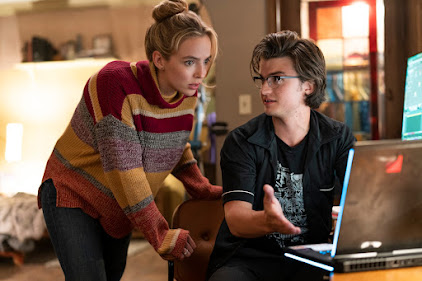
My favorite aspect was the real-people characters played by Jodie Comer and Joe Keery. They own the heart of the film, baby-sized as it is. Keery's relevance to the plot was especially a nice surprise. I was fully expecting him to be a side character meant for more jokes only. In fact, I wish there had been more real-life all around. Comer's character is even more essential on paper but doesn't feel it because we see her mostly in the game, where she lacks her real-world personality. We thought that Reynolds' star-power, the humor, and high concept actiony videogame fun was the point, but it's not, not really. It's dressing. Free Guy remembers that better than most, but not quite well enough.

Sunday, February 21, 2021

The Kid Detective

Spoiler-free!

Abe Applebaum was a prodigy as a kid. He solved mysteries. "Who stole the school's fundraising money?" "Who stole from the candy store?" "Where's that missing cat?" The whole town loved him. He was so good, he got his own office at age twelve. Now, he's thirty-two. "Is this guy I'm interested in gay?" "Who stole my silver brooch?" "Where's that cat gone this time?" It's all the same deal, except no one cares anymore. He couldn't crack the only case that mattered and fell out of the town's good graces. But now, he gets a chance to redeem himself when the girlfriend of a murdered high schooler asks him to take on the case.

Written and directed by Evan Morgan. This is his first feature, and you can tell—he's clearly still passionate about his stories and dedicated to telling them well.

This movie would be good on set up alone: A dark comedy that blends two worlds of mystery-solving seamlessly together. Half a kiddie detective mystery, with all the cute tropes and cozy tone you'd expect—and half a cynical neo-noir, wallowing in the sadness of a tragic past and floundering through shadowy underworlds and oodles of booze in search of redemption. As we wind through the trail of clues and the twists and turns that we know are coming but still surprise us when they arrive, we are invited to laugh with pathos and feel warm surrounded by the gritty dark. And we do.

The thread that holds the halves together is Adam Brody. No one else can do cynical humor like he does. It's hard to make an audience sad and still get them to laugh, but Brody's hardboiled man-child loser-detective-who-still-cares has it in the bag by scene two. He probably could have played Abe in his sleep and got away with it, but he digs in and fleshes out what the script brings to make a well-rounded character of real, relevant flaws, and genuine sympathy. The role is practically custom-made for the unique persona he brings to the screen, but heck, the whole premise and plot is custom-made for that kind of character. Whether by design or lucky happenstance, this is the kind of casting that clicks like magic. 

Supporting cast is great too. The "bad guy" especially.

For me, it always boils down to character. I spent the whole movie chuckling sadly at Abe's pathetically cynical devotion to his investigation, and that's what won me over, but I have to say—the investigation plot itself was far from pathetic, holding its own alongside the strong premise and character. It incorporates a lot of "Hardy Boys" type antics and formula—hiding in closets when you're snooping in someone's house and they come home early is a running joke—and follows a tight and detailed trail of clues in a classic way that evokes noir mysteries as well as cozy detective tales. Then when the puzzle pieces all fall together for the payoff, it's as satisfying and rewarding as either genre could ever hope to achieve.

I was impressed at how effortlessly refined the writing was too. Plot details and witty lines stand out as they should, but equally as sharp, though less prominent, is the theme. The idea of tainted innocence is embedded so deeply that it permeates the whole story, but never in a blatant or tactless way. And the tonal balance is deceptively effortless. It gets serious and intense but is able to turn out consistent laughs amid it all. The duality—light yet dark, kiddie yet adult, innocent yet cynical—works as more than a fun premise idea because the filmmaker recognized the concept's value and structured everything around it.

All while slapping together a hardcore murder mystery like that's easy or something...!

A huge, popular audience may never be cultivated for this flick, and that's too bad, as even the pickiest of mystery connoisseurs would be hard-pressed to find disappointment. I think it'd make a good companion piece with Brick, and would recommend it to anyone who likes that movie, and/or cozy mysteries with some adult content, and/or darkly comic neo-noir thrillers, and/or Adam Brody's particular leading man skills. For me, that adds up to only one possible conclusion: I love it. Case closed!

Sunday, December 20, 2020

Love and Monsters

Spoiler-free!

Seven years after the earth is accidentally turned into an apocalyptic wilderness inhabited by giant, mutated insects and reptiles, survivor Joel (Dylan O'Brien) finally reestablishes contact with his long-lost girlfriend, Aimee (Jessica Henwick). He's useless as far as monster-killing goes, and her underground colony is 80 miles away from his, but he's determined to be with her again, and rekindle what they had. So off he goes, braving the monsters for love.

Don't settle for an unfulfilled life. Even if it's the apocalypse!

I'll put it simply: it's a refreshing adventure, and a blast of entertainment. Joel meets a friendly dog who joins him, then joins in with an old man (Michael Rooker) and his unofficially adopted daughter (Ariana Greenblatt). He meets and runs from many gleefully-rendered scifi monsters, eventually learning how to survive them. It has everything I could think to ask for in an action/adventure film. It's brightly colored. Fun to watch. With engaging action sequences that don't exist just to fill a quota. And moments of wonder, which every adventure film needs to be complete. It doesn't forget the heart, and has sweet genuineness to hold it all together. It's not breaking new ground on its genres; it's just filling the established mold with high quality material.

I don't even have a "but" to add to that. It's not gonna be my new favorite movie or anything, I just don't have any complaints. There was one thing I was expecting the film to do that it didn't and felt like a loose end, but I think it was mostly me projecting that made it a thread at all. The characters are archetypal, but that's not a problem when they're done with enough dedication. And by my calculations, dedication is Dylan O'Brien's greatest feature as an actor. If a script gives him something solid, he seems incapable of squandering it. He always plays a variation of himself, but who cares—he's clearly gunning to be the next Tom Cruise, and I think he's got the job in the bag.

Not everyone can channel entertainment so effectively.

Movies like this ride on charm and how high the entertainment quality can go. And O'Brien isn't lacking on leading man skills but to that end he still gets charm backup in the form of an unrelentingly adorable dog actor. They worked so well together that it makes me wonder why more movies don't include talented doggies. It's not like he was vital to the plot or anything. He simply made the movie better by making it more entertaining. The CGI wasn't anything to write to your long-distance girlfriend about, but it wasn't bad either and far from bland visually, which makes it actively good in my book; adding to the entertainment. As does the creature designs. And the good-natured comedy. And the way it steps into serious, dark drama, but doesn't wallow in it.

Ah, entertainment. Sometimes you need an escape, and this movie is eager to give it to you. Unexpectedly, it has more to give on top of that. Everyone knows you can't make a film these days without a nice, fluffy message to make it feel complete. Some universal truth to reiterate in a positive way, so we can walk away from our entertaining escape feeling reinvigorated toward real life. Accidentally, this little flick hits the nail on the head with a universal message that it couldn't have known, at the time of writing and filming, would be so relevant to the state of humanity circa 2020.

This movie knows what's up more than it realized it knew.

Love and Monsters doesn't shy away from the fact that there's danger in the world. It openly acknowledges it, and shows how painful it can be. Then, it wisely points out that being afraid of said danger is only a hinderance. It says there are things out there worth braving the danger for—personal, and communal. It shows us that the world isn't as bad as rumors and built-up fear sometimes makes it seem; and that hiding doesn't exclude you from danger. It values freedom over safety, and suggests that freedom leads to true safety, rather than a false illusion of it. Then it literally says, "There is a great big, beautiful, inspiring world out there. Go. Live your life. It won't be easy but it'll be worth it."

Leave it to some unassuming little adventure flick about giant bug monsters to remind us to have a little courage in this real world. No matter how scary or dangerous life gets to be, there's no excuse for not living it to its fullest—let alone not living it at all.

Monday, December 7, 2020

The Personal History of David Copperfield

Dev Patel is well-off, then bad-off, then well-off, then bad-off, and then well-off again in this brisk and charmingly color-blind adaptation of Charles Dickens' novel.

I wonder if they thought, "Dev Patel would make a great David Copperfield" and then decided to ignore race in the casting, or if they decided to ignore race, and then realized Dev Patel would make a great David Copperfield.

Two hours of screen time is not long enough for an 800-page novel. I've yet to read it, but I don't need to know what was shortened or cut out to know that it was done. Severely, I expect. And that's why I'm glad I saw this before reading it. Because I enjoyed it immensely, and though I know I'm missing something, I haven't a clue as to what. Well—I do in a general sense. But more on that later. At first brush, David's journey of growing up and becoming a writer, surrounded by a rollercoaster of ups and downs, and an even more wild ride in the forms of eternally kooky supporting characters, feels like Dickens 100%. If you get a Dickens itch, this will scratch it.

It speeds along through the plot at sometimes too great speeds, although it never gets exhausting and has good pacing. The only thing I waited for was for young David to grow into Dev Patel—and once he did the film came alive and found its lively and comfortable groove. I don't know what David's personality is supposed to be like, but Patel seems to me a Dickens hero through and through. Easy-going, energetic, funny and sincere with occasional outbursts of anger and naïve stupidity. Ideal. Tilda Swinton, Hugh Laurie, Peter Capaldi, Rosalind Eleazar, Benedict Wong, Aneurin Barnard, Morfydd Clark, and Ben Whishaw all added to it, but it was Patel who made the movie sing.

There are some first-rate scene transitions in this thing.

The problem comes in when the movie reaches the dramatic parts that are meant to have stakes, and you realize that they were skimmed over so quickly that it's tough to figure out what bad had happened, let alone care about it. This movie hits the colorful, charming, and fun notes remarkably well; but in order to be fully satisfying, a story needs the audience investment that serious drama brings. And while it's not lacking in it completely, it was frustrating when the movie ended, and I realized the film had only included us in half of David's experiences. We get a full sense of his happiness, but the trials are cut short and brushed aside. I grasped that Ben Whishaw was the movie's main villain in the same scene in which he's defeated. I had no time to care. Without the downs of a story, how can an audience fully appreciate the ups?

So it left me fully charmed, but only partially invested. And that's too bad, because while I like being charmed, it's getting into the nitty gritty of caring about the characters that ultimately most important to my falling in love with a story. Still, you can hardly blame The Personal History of David Copperfield for focusing in on what it did. It may have left me a little empty, but it clearly wanted to focus on the brighter side of everything and have fun, and that's what it did. All in all, its shortcomings left me wanting to read the book—and that's a compliment in itself. 

Monday, November 30, 2020

A Rainy Day in New York

Spoiler-free!

Timothée Chalamet plays the Woody Allen archetype and Elle Fanning plays the most annoyingly hyper and ditzy girl imaginable in this laid-back amble through NYC—and they do pretty good job at it. 

It's kinda like if an AI copied Woody Allen. And that's kinda part of the charm.

They go to New York from their upstate college; Elle for business (she landed an interview with a semi-popular artsy filmmaker) and Timothée for pleasure (he loves New York, naturally). They part ways, planning to meet up later. Typical Woody Allen hijinks ensue. Quirky, ponderous monologues are made. The two characters meander from place to place, finding and losing other odd characters played by other famous actors as they get into and out of niche situations. Liev Schreiber, Jude Law, Selena Gomez, Diego Luna, Cherry Jones... It rains. Then an ending place is reached and the credits roll.

It's par for the course on Woody Allen movies. If you always like his style, your mind is made up. If you always dislike his style, likewise. I'm in the middle somewhere. Watching this thing breeze by, it felt meandering and pointless, though not unpleasant. The cast was nice. Even Elle being annoying was intentional and had amusingness in it. Timothée was a little more relaxed into his role than he sometimes is. (It's not a try-hard acting part.) He comes across a little pretentious at first then warms as we follow him through the day. I was lukewarm on it overall. But then the ending shone a different light on preceding events.

This movie is all about the journey, but my taste in entertainment relies (perhaps too much) on destination.

I guess that's the thing about Woody Allen. You know to expect the meandering, the monologues, the old music. What you don't know is whether the plot is going to work for you or not. With a plot as meandering and distracted as this one felt, it seemed capable of going anywhere—until it got to where it was always going. And I have to say, I liked the destination. I liked it so much that my lukewarm feelings have turned into something more substantial. Something more distinctly positive. Something I wouldn't mind wandering through again someday.

I think that's all this minor jaunt was intended to be; I won't bother it for anything more.

Saturday, July 11, 2020

Palm Springs

Spoiler-free!

It's the wedding day of her little sister, and Sarah (Cristin Milioti) isn't feeling it. She's saved from a maid of honor speech she didn't know was required of her by a strange guy in swim trunks and a Hawaiian shirt who gives a speech that she feels like is directed at her. Then he dances through a crowd as if he knew every move each person would make. Weird, but funny. He's Nyles (Andy Samberg) and the day only gets weirder from there, once they go out in the desert together and a man with a camo-painted face starts hunting Nyles with a compound bow. Sarah follows Nyles into a cave where there's a weird orange light -- and then wakes up on her sister's wedding day. Again.

Now available on Hulu!

Yep! It's a time-loop movie. With the slight twist that people can share the loop. Nyles has been there a long time, and so has bow-hunting man (J.K. Simmons), and naturally, Sarah's mad that she got stuck too, even though Nyles definitely told her not to go in the cave. How to escape the loop? And what to do to fill the days until they figure it out? Well, the movie has a fun answer for the first question. It's answer for the second is a mixed bag.

Since the death of the 90's rom-com, every rom-com now must have an explanation for when there's a slightly fantastic element needed to create the situation. Bill Murray's time-loop had no explanation, nor did it need one. But this movie does. I find that unspoken requirement worryingly limiting, but this flick takes good advantage. It's scifi streak is one of the better things it has going for it. The movie is strongest when the streak is more prominent. It's mostly at the beginning and the end, when you feel the weight of the weird, impossible circumstance, and the characters have a clear goal in front of them -- of escape.

Without a goal the movie begins to sprawl distractedly.

In the middle, particularly the earlier middle, it's more about having fun with the loop and doing all the things you'd do if you knew what will happen every day. This is where mediocrity creeps in. Perhaps slightly because both our main characters are aware and make different choices every day, so the looping doesn't feel as present. But they're also put away from the wedding party too often, which gives their days unwanted variety. The repeated moments are limited to one or two lines, never entire scenes or even conversations. Instead they get to know each other through the days. Almost like a normal rom-com. But the film does insert some character mysteries for the audience to pick up on during that time, too.

These "mysteries" were my favorite thing because of the slight way they were introduced, and then handled to bring some genuine depth to the characters. The film still leans heavily to the comedy side, but a little drama and a tad of darkness rounds out the tone. Even more rounding would have been welcome if handled well. But Andy Samberg is far more suited to comedy anyway. He ranges from charming to cynical, but it's all for humor. Cristin Milioti isn't as effortlessly funny, but also digs in deeper for the dramatic moments. Their chemistry was bubbly and warm, which sets a pleasant, light-hearted feel for the film. Even when the movie went too far for me, it was hard to be irked for too long.

I didn't fall in love, but I was charmed enough to not care.

Palm Springs doesn't waste its time trying to stand out from the pack of movies that took inspiration from Groundhog Day. Instead, it embraces the comical situation, feeds the expected romantic side without too much cynicism, and doesn't neglect pondering a little on the deeper side of life, with a lightly life-affirming message. It throws a few new elements at us to keep us on our toes, but at its core, it's classically done. And though the execution isn't without missteps or unnecessary rabbit trails, it clearly understands the appeal of this niche and always fun premise. Like a familiar and cozy place that you can visit again and again.

Sunday, March 8, 2020

Emma (2020)

It is my firm belief that Jane Austen's books should see a new adaptation every ten years or so, and so far, filmmakers have been very dutiful in humoring me with this work in particular. Emma is the most broadly appealing of the Austen works, playing out as a sharp and lively rom-com in regency-era settings. It has been adapted to film five times by my count, and this fifth one, with Anya Taylor-Joy in the title role, is keen to not feel repetitive.

And so, it's directed with style, by Autumn de Wilde.

It is a faithful adaptation. And honestly that's all it needs to be to earn my seal of approval. But it goes beyond that, too. In its eagerness to make itself stand out from the pack, it puts much effort into its visual style, and also focuses down on a few key emotional and thematic elements to make the story stick; which as a side-effect means that elements that don't involve those key parts can be left wanting. Attention is mostly given to the character of Emma; to see how far into her flaws you can delve before she loses her appeal and charm. In that case Anya Taylor-Joy was the perfect choice to play her -- at least for me, since I am already biased to like her. The movie is upfront about her flaws, but successfully allows us to also see the good heart underneath too, as she works tirelessly, yet misguidedly, to improve the lives of those around her.

And yet, little of the film's focus is on acting. Casting was done, it seems, with stress on appearance, and the result is mixed; characters who look right on surface might occasionally feel out-of-sync with the characterization. I wasn't enraptured by any of the performances but think positively of them all. The characters that were explored deeper sometimes seemed squished to fit a mold that the direction laid out, but worked beautifully when the natural charm of the actors would shine through. Especially with Mia Goth as Harriett. Taylor-Joy is a commanding and charming lead, but some of the emotions Emma expresses are intentionally simplistic. The only way I can account for this is in the assumption that the film cared more about being different from other adaptations than it cared to be natural or instinctive about the character's thoughts and reactions.

It didn't want to copy anything -- but that's a hard task when so much has been done already.

And then some characters were only explored on surface level. This isn't any fault of the actors, but the result of a script that simply doesn't have time for them all. That's the eternal problem with Austen adaptations: you can't reasonably expect any theatrically released romantic comedy to be over two hours, but unedited, Emma's plot is too complex to fit into less. So, adaptations rise and fall on what they choose to leave out. This one leaves out a few things I would have wished to see -- like more of the truth behind Frank, or a more groan-inducing look at the detestable characters such as the Elton's -- but it also includes at least one part that none other adaptations have as I recall, and some small, original moments that serve to build the film's emotional core in the desired direction.

If it lacks one thing for sure, it is cheerfulness. While often funny, the humor is more cynical than light and gleeful, and moments of negative emotion are handled with more care. Again, intentionally directed focus. It's more interested in seeing the error of these people's ways than basking in the humorous ridiculousness of human folly. I love that Jane Austen was able to take things lightly, and I missed that sense of unadulterated enjoyment here. Small quibbles involve some bizarre choices made: the men's collars coming too high on their faces, an unexplained moment where someone's nose bleeds for no reason, and one or two off-putting moments of undress. I will always find that kind of thing unnecessary in Austen films -- but will likely never escape them.

I wasn't wowed by the style, but didn't need to be. Style or no style, it hits the right notes when it should.

The camera placement is hard and bold; sometimes to the detriment of the scene, when it cannot find a reason for its actions. Too often the style was done for the sake of style itself and contributes little to the overall quality -- as nice as uniquely pretty costumes and bright green fields are to see. It doesn't integrate itself into the story. Lines are often ripped from the pages which I love, but then occasionally there were silences between those lines, meant to be charged with emotion and context, that came up dry. And Austen's dialogue, ready-made and sparking with wit, was sometimes delivered almost as a side salad to the high-brow slapstick comedy the film invents for itself. A bizarre disconnect.

The scenes that do meld, and do connect -- which make up the majority -- are wonderful and innate. I wish the film could have found that stride throughout its run time, but I think it opposed itself too often and tripped itself up from time to time. It is funny, it does have moments of great charm, thoughtful sincerity, and smile-inducing romance -- but most importantly, it's a solid adaptation of Jane Austen's winning story. Not quite perfect, but no matter: we can't all be as perfect as Emma.

Wednesday, February 5, 2020

Parasite

Spoiler-free!

This Oscar-nominated South Korean dark comedy tells the story of the Kim family. It all begins when the son, Ki-Woo (Choi Woo-Sik) is approached by his friend who's hoping he'll take over tutoring a rich girl he likes. He trusts Ki-Woo not to steal her out from under him, and doesn't care that he technically isn't qualified to tutor. Ki-Woo's sister Ki-Jung (Park So-Dam) forges university papers for him and he's off. But the rich mother also has a son who she considers a budding artistic genius. Ki-Woo sees an opportunity for his sister to get in on the enterprise too, and soon she has become a "prodigious art teacher." The next steps are to get their also unemployed father (Song Kang-Ho) and mother (Chang Hyae-Jin) into the household, but that may take more than some white lies and the slope keeps getting slipperier...

The Kim family! Pleasant, charming, devious, criminal.

The big appeal of this story is how unique it is. A poor family that literally lives halfway underground in a cramped and stink-bug infested home, slowly and steadily infiltrating a rich home that sits high up on a picturesque hill. While they're on top of the world, the Kims talk of living in the house as theirs -- and in a way they do. And when they're low, they're literally existing in the gutter with sewage surrounding them. It's fascinating to watch their plans and schemes unfold, especially because plans never go the way they're planned to. The plot is like watching a slow-spiraling plane crash and a beautiful rocket launch at the same time.

Bong Joon-Ho of Snowpiercer fame is the writer/director, and his craftsmanship is tight and full of unique style. He excels at creating unprecedented situations and placing characters into them that are interesting and different so as the navigate the situations in an entertaining and unique way. Here I especially liked the family dynamic, where they all just kind of accept the criminality of the scheme from the get-go, and work together like gears in a clock to get it all done. Bong creates instances of darkness and comedy that exist together perfectly. There's moments of joy, tragedy, horror, and thoughtful fascination. The look of it is rich and sticks with you. It's all-around a beautifully crafted piece.

But a well-crafted film doesn't equal a universally great film on its own. 

And yet, despite all this, I didn't love the movie. I was entertained, amused, horrified, and fascinated by it, but I could never cross the threshold into love. I've thought about why, and have concluded that I couldn't care about the story and characters in the way I need to in order to love a story. And it's not because the characters are bad people, per se -- that makes investment harder but isn't a deal-breaker for me. This movie asks its audience to sympathize with the Kim family, and I could. Especially Ki-Woo, who participates the least in the wrongdoing and who the story somewhat centers around. He has a naive hopefulness to him that invites pity more than blame. And you do feel for the situation the family begins in. They are poor, but talented, and have grand aspirations. What's not to sympathize with?

However, in their pursuit of riches and comfort, they bulldoze anyone in their way -- not only their elite targets. It's also worth mentioning that the rich Park family are not bad people. They're aloof and careless in how they deal with people, but never "cross the line," as it were, into law-breaking. And the Kim family are equally as careless of anyone not a part of their clan. So I found it hard to root for them, as their redeeming qualities dwindle over time. I don't think the film needed me to root for them, but without the investment that caring for characters brings, the impact of the film's later events is severely lessened. They're merely interesting, which the movie always was. There's no switch in which I became engaged on a personal level -- something vital for me to care about a film, if not to appreciate or admire it.

We all feel inferior from time to time. We all get that sense that people can smell that which we want to hide. Most of us already know that it's no excuse.

It frustrates me the more I think of it, because with the right tweaks I could have easily invested -- but I'm beginning to doubt that's what the film wanted at all. Ki-Woo is who we understand best, but once Ki-Jung enters the house, she overshadows him completely. She's that kind of person -- fascinating, and captivating to watch, but fake. We never know her. We know the father, Ki-Taek, and once he comes along he overshadows both the kids, but his motivations never sat well with me. I wanted to understand the kids better, but we never get a real chance, and by the end I didn't know any of them well enough to care what happened to them. Being hard up is not a character trait. It's a circumstance; and one that isn't automatically deep enough to forge a connection that would inspire me to look past certain behaviors.

So in the end, interesting is all it could ever be for me. For other people it was more, and I can see why. I want to mention that, because perhaps you reading this may be one of those people. Or maybe you're the sort of person why doesn't need to care about a film's characters in order to love the film itself. Either way, if you love dark comedy that is both rich with seriousness and light with wit, and if you like to see a unique plot unfold that you've never seen before, Parasite may be well worth your time, and your riches -- such as they are.

Monday, November 18, 2019

The Peanut Butter Falcon

Spoiler-free!

In the movie to most thoroughly warm your heart this year, Zak (Zack Gottsagen), a young man with Downs Syndrome, runs away from the rest home where he restlessly stays with all the old people, and bumps into Tyler (Shia LaBeouf) a borderline vagabond who's struggling to hold his life together in the rural Outer Banks of North Carolina. They form an unlikely team and go on the lam together, evading vengeful fishermen, and a pretty caregiver, Eleanor (Dakota Johnson). Their destination? Friendship, adventure, and a wrestling school, where Zak plans to meet his hero and fulfill his dream of becoming a wrestler.

Written and directed by Tyler Nilson and Michael Schwartz.

I feel like there's not much more I could say to tempt you if the premise doesn't already have you sold. You look at the characters there, and the situation they're put in, and the rest of the appeal of the film just falls into place. Unexpected bonds, high adventure in the American South, danger and fun laid out side-by-side; it's relaxed and easy-going like all true Southern films should be, but cares deeply about the characters and their journeys. All that it promises with perfect clarity through the set-up, and it delivers on every promise with an impassioned sense of duty. Oh, and did I mention romance? I thought romance was dead in film; not in The Peanut Butter Falcon!

There were two things I was sorely missing in 2019's line-up of new releases, and this movie filled both those holes in one go: Adventure, and romance. On the adventure side, it goes just about as far as it can without getting into a fantasy sub-genre. It has that otherworldly feel of the rural south (and I say that as someone who lives amid it) that it sinks deep into like a muddy river, and that world does the work of suspending your disbelief for you. It's true adventure -- with quests and perils, beautiful scenery and lots of walking. On that note the cinematography was lovely; there's a certain style that perfectly captures the laid-back feel of southern living, like in Jeff Nichols' Mud, and this one has it.

Even without the entertaining plot and neat, thoughtful characters, this movie is lovely to watch.

Then on the romance, it's weird to me how in general movies have lost touch with romance, especially if it's a side plot. It's somehow become annoyingly clinical, like filmmakers are afraid of having two characters gaze at each other and show the audience the moments that make the characters fall in love. I don't mind that filmmakers and trying new approaches to romance (for example this year, I appreciated the focus on friendship over romantic feelings in Five Feet Apart). Often I feel that films are holding back though, and even though this movie's romance is on the side, it wastes no time to get to it, or opportunity to develop it and make it sweet and appealing and everything romance should be.

The writers/directors are new to feature films and you can see the care of this first project in the craftsmanship. The movie remembers to pay off everything it sets up and ends every bit as well as it began, not losing steam or interest as productions with less passion behind them are wont to do. But it also is remarkably sure of itself, for the artists being new to the game. They have a great understanding of what makes films entertaining, pacing, and how to convey real meaning through the craft. The film feels personal. Apparently they made it for their friend Zack, so he could have an opportunity to dig into acting on a large stage, and that focus an intent comes through. That's what makes it appealing to audiences who don't know them or Zack from Adam.

Supporting cast includes Jon Bernthal (with less than 5 mins of screen time as usual haha) Thomas Haden Church and Bruce Dern!

I'm sure they worked hard at it, but they must have also gotten lucky, because the cast line-up is perfect, and not just because they nabbed big name stars like Shia and Dakota. They're big, and good actors, yes, but most importantly they fill out their roles beautifully. I hope Shia LeBeouf is back to stay because he's hit a new stride of acting that suits him; never more naturalistic or subtle or universally appealing as this troubled hero teetering on the edge of destruction. He's dark but not weighty. And Dakota Johnson has a soft strength to her that is impossible to mimic and ideal for this character. The more I see of her the more I love her. Zack is a perfect embodiment of this film's heart, and the three of them have grin-inducing chemistry together.

Some movies have magical timing, and this is one. It could have taken so many paths that would've led to an element not coming through properly, but instead everything fell together like clockwork, and I think the result is the best possible outcome; an immensely satisfying feeling. It certainly had perfect timing for me, swooping in, you might say, like a falcon, to save me from the frustration of films that fall short or miss opportunities to dig into the elements of stories that I want to see. I love that The Peanut Butter Falcon wasn't made for me, but because it was made for someone else, I get to see and love it as if it was.

Saturday, November 9, 2019

Jojo Rabbit

Spoiler-free!

I hesitate to start this review of Taika Watiti's latest project, a hilarious and sad dramedy that satirizes Nazism, because I don't want to talk about Marvel anymore -- too late already. And anyway, I can't think of any better way to describe the way this movie succeeds in walking a thin and unexpected tightrope that even Waititi himself has previously failed to traverse.

No, I'm not going to compare the Marvel Cinematic Universe to Nazis. 

Maybe you liked Thor: Ragnarok, and the way Waititi used Marvel Brand humor in it. If so, go see this movie. If you thought Ragnarok was funny, you'll think this film is hilarious. What I'm here to say though, is a slightly more shocking revelation: that even though I hated the humor in Ragnarok, I still thought Jojo Rabbit was not only wonderfully hilarious, but also incredibly moving and upsetting, without forcing the comedy to give way to the darkness, or vice versa. It's a black comedy, but usually dark comedies don't make me laugh out loud. And usually laugh-out-loud comedies don't make my heart ache. So this little rabbit is a strange beast indeed.

Starring Roman Griffin Davis as Jojo, a nine-year-old Nazi Youth recruit who dreams of being best friends with der Führer. An imaginary version of Adolf (played by Waititi) appears to him from time to time to council him in the ways of the Reich. Jojo's mother (Scarlett Johansson) is hiding a Jewish girl (the one-and-only Thomasin McKenzie) in the walls, and when Jojo discovers her, his loyalty to the Nazi ideology is tested in life-changing ways.

He comes of age and must chose a path as he is slowly taught what Nazism really is.

This film's greatest feature is its unique style of comedy. Everyone in the film does cheesy German accents, and most of the jokes, as expected, are about Nazism and WWII. But because Waititi writes with his very specific New Zealand-style comedy, the two elements blend in an inimitable way. The result is winning. The jokes are often dark, yet presented with such good-natured sincerity that the films stays light. Now comes the Marvel comparison. Because this movie, much like they, and specifically Thor: Ragnarok, attempt to blend humor with serious drama -- sometimes within the same moment.

If you know me, you know that this is one of the things that bothered me most about Ragnarok (and the MCU of late in general). Because when you put humor and seriousness together, the result always seems to be that the humor undercuts the serious drama and renders it null and void. I won't say that Jojo Rabbit's drama is equally as effective as it would be as a straight drama, but it is, without a doubt, as effective as it meant to be. It can hit hard. I think this movie does two things that the MCU has yet to try to make the mixture work: One, that it is a dark comedy in the first place, so even in the "pure" humor scenes there is always an undercurrent of the horrors that occurred in Germany during WWII.

From the horrors, it admirably refuses to shy away.

And the second thing that makes the mixture work is that it's done at a higher rate of swapping tones. The MCU (I'm sorry to write it this many times) will usually have a serious moment that is capped by humor. Jojo Rabbit, within the same amount of run-time, will have switched from humor to serious, to humor, to serious, to humor again -- and I think most importantly, it ends the exchanges with seriousness. That lets the audience know that ultimately, it's the real things; the heart and the drama, that is most important in the film. That makes a world of difference.

On that note, Sam Rockwell stole the show for me, being his usually brilliantly hilarious self with a role catered to him, that melts into poignancy later on. Stephen Merchant also hits a perfect balance of tones. Archie Yates as Jojo's Hitler Youth friend is a scene-stealer. Johansson tips toward drama as she's meant to and performs her heart out. McKenzie has that special, sweetly tough quality about her, and it works wonderfully. Waititi limits himself, which sharpens his wild-card character. And 11-year-old Roman in his introductory role carries the movie, despite all the seasoned acting strength that surrounds him. The movie is about him, and the focus on Jojo, his mind, his arc and his struggles, is sharp.

And it does it all while being riotously funny!

I'm glad the berating of this movie for making fun of Nazis didn't last long. Turns out there's clearly nothing wrong with making fun of evil, and neither does this movie forget that evil is what it's making fun of. It doesn't pull its punches but also never loses sight of the light that it wants to promote while it beats down the darkness. Its laughs won't soon grow old, but neither will its tender heart. Jojo Rabbit is a brave little film.