Pages

Showing posts with label 3 star movie. Show all posts

Wednesday, January 29, 2025

Wolf Man

This intimate take on a werewolf story is wonderfully parsed-down. Centering around a family of dad, mom, and daughter, a remote farmhouse, and vast woods. There's a werewolf in there somewhere. Not hard to guess. And the transformation aspect is a body-horror metaphor that drives the family drama. Not hard to see coming, either. Which isn't to say it's not good. I like horror movies where the monster is a metaphor. (The last movie I liked enough to review here was Godzilla Minus One.) But it isn't to say it is good, either. Predictability doesn't necessarily dampen a movie's impact, nor does including a plain metaphor guarantee it. 

Directed by Leigh Whannel, with Christopher Abbott in the lead.

It seems to me that Wolf Man's problem is the clash of two good ideas. On one hand, there's the plain-spoken and effectively drawn metaphor of turning into the wolf-man being likened to having a genetic disease. On the other, a theme, equally as plain-spoken, that a father's job is to protect his children. I can imagine holding those two elements in my hands and feeling the storytelling glee of combining them in a beautiful, meaningful and clever way. And it does start out this way. We see the similarities between the dad and his father, who was protective but cold and angry, in how he tries to be a protector, but not like his father was, and yet fails into it from time to time. And when the dad is scratched by a strange creature in the woods and slowly begins to change, obvious parallels of a degenerative disease come into play in some interesting and horror-ific ways.

Here is where the movie had its most effective storytelling. How it shifts from the dad's confused and false perspective to the mom's equally confused but terrified and real one. How it slowly builds on, and has thoughtful reveals of, each aspect of his condition. The way these moments are filmed and portrayed, especially visually, but even taking into account more than the visual aspect of film, felt unique to me. And the building drama in this section is sweet and sad, juxtaposed with dread and discomfort. Here we wonder what will happen, while simultaneously knowing, and we can't turn away.

I love that it used practical effect but not in a show-off way. Kept me immersed.

But when the progress reaches a head, plot decisions must be made and implemented. In the moment, I was invested in the turns taken in this section, but I lost that thread of dreadful understanding which the story had provided so effectively earlier. Here is where the story's theme should start to become a thing proved (or disproved) instead of merely said. But instead of interweaving with the metaphor, it seems to get lost in the shuffle of moving parts and ending set-up, and is, as far as I can tell, wrapped up before the finale even starts. But without this theme to add new perspective, what interest or deeper meaning is there in a clear metaphor with an inevitable conclusion?

The story falters instantly. From there, some classic horror storytelling takes over, with plenty of good moments as far as technical filmmaking goes. Jump scares, gore, dramatic suspense, practical effects achieving some solid but not gratuitous body horror—all things we're here to see—but all getting drier and drier as the movie flounders to build a thematic ending from scratch in a fraction of runtime. In the end, the theme and the metaphor aren't a clever combination of two unique human realities portrayed in the fantastical form of a monster. The metaphor just is what it plainly is. And the theme is what the metaphor is, too, adding nothing new. Unlike with the wolf-man himself, a transformation I was disappointed to witness.

Wednesday, August 23, 2023

Sound of Freedom

It's always complicated when a work's value expected to be judged on more standards than entertainment and artistry. This movie is activism; made to shine a harsh light on the realities of child sex trafficking. I think that's a good goal, but good motivation doesn't ensure quality of the product, and I want to judge movies on artistic scales, not moral ones.

So I'm conflicted. Some was really good. And some felt more like a sermon than art.

And with that reservation, I went into this movie already closed off to it. Whether that's fair or not, that's the lens through which I write this. Aware that the goal was raised awareness and not entertainment, I found the opening scenes exploitative and uncomfortable in ways that made me angry at the movie itself, for showing young kids in sexualized situations. That's what the movie wanted; to make me angry, not to entertain. But the story, viewed outside of the movie's framing of it, isn't just about horrors and evil in the world, but about hope, and justice, and the good that fights that evil. 

I'm not usually one for true stories but this ticks the right boxes to work for me. It features a regular guy, just doing his job to the best of his ability—but far beyond what's expected of him, or what others in his position would have done. The plot is self-contained enough that it has a clear point where the goal is accomplished, and all the right places for the ups and downs, tension and release that storytelling is—but the feeling the movie evokes conflicts with all that. It shows but doesn't embody what's on paper. It effectively made me feel sick. It effectively built tension. But then when the goal was accomplished, there was no emotional effectiveness. No release. No relief. Did they mean for those moments to carry catharsis? Or was the lack an intentional choice? 

I enjoyed seeing Jim Caviezel again. I wish they'd found a more creative way of showing Tim's deeper emotions than having him monologue while misty-eyed, though.

Filmmaking 101 says that your opening shot and your closing shot are mirrors of one another. Viewing them side by side, you should be able to see what changed over the course of the story. So, Sound of Freedom opens with the little girl who is will be kidnapped, sitting on her bed, alone in a dim room, playing a drum. And in the ending, after she's rescued, she's in the same room, on the same bed, with the same lighting, playing the same drum. Except... what? There is only one change. And if you're paying attention maybe you're thinking, "she's not alone in the final shot. She's saved and restored to her family, so they're there, gathered around her and they're all happy and free." Nice idea. But no. She's alone at the end, too. The only change is that the camera pans inward at the opening, and outward at the end. And for some reason I can't move past that.

There's a lot of things I could spend time here going over. Things like writing, and performances, and production quality—but all that's sticking with me is this irresolvable question. Why? Why didn't they show her with her family at the end? Why did they make the ending just as bleak as the beginning if the story was supposed to be uplifting? And the only thing I can think of is that they thought if they made the conclusion too happy—if they released their audience and gave them their reward of catharsis—that wouldn't spark as much real-world change as they wanted, because the audience would have a sense of resolution as they left the theater. So they didn't. 

Even the tender moments have this underlying ominous dread. It's just so relentlessly heavy.

They left it focused on the darkness, even though hope was right there on the page, bleeding over from the true story in real life. The reward was there for the taking, but they sacrificed it on moral grounds. For a call to action. And no matter what good intentions they had behind that, I can't like it. It was good in a filmmaking sense. The cast was good. The characters were great. It forced me into the world it built, and it successfully accomplished its goal. But I hated watching it.

Thursday, August 10, 2023

Mission: Impossible - Dead Reckoning Part One

Fortunately, I can still say I don't hate any of the Mission: Impossible movies, and say that there's a certain amount of merit to all of them. Unfortunately, Dead Reckoning's merit isn't as prominent as the series has achieved; and more unfortunately, it doesn't have the fallback that Mission: Impossible 2 takes advantage of, where you can call the melodramatic silliness "fun" (if so inclined) and "different" (to point out that the movie certainly does try its own thing.)

It's nice when a movie can slip and still be enjoyable. But right now, a movie that doesn't slip at all is worth its weight in gold.

Dead Reckoning. Part one. One complement I can get out of the way is, even though it's a "Part One," it doesn't leave us hanging as far as feeling like we've seen a complete movie. We know there's more to see, but the movie does fulfill everything it sets out to accomplish. Director Christopher McQuarrie and Tom Cruise have now done three of these movies together, and it's unlikely they'd take an obvious misstep. No; instead, what they should have been worried about was that the groove they established in the series with Rogue Nation would too quickly become a rut. Fallout didn't pack the thematic/character punch that Rogue Nation did, but the stunts and visual entertainment was so stunning that I was willing to brush it off as a natural ebb and flow of quality. The next movie would right it.

But it didn't. And, I'm sorry to say, the action element has dropped off now, too. First, thematically, the movie is about the kind of honorable duty involved in taking a job in a secret agency that will disavow you the second you get into trouble—while sending you off to get in trouble as your job. Ethan and Co. meet up with and befriend Hayley Atwell as Grace, a highly skilled thief, and through friendship and loyalty, tempt her over to the good side. The idea is nice. "If you're going to risk your life for something, risk it for your friends and the good of the world." But while that's a simplistic enough idea, it still doesn't come through the plot so much as it is told to us (and Grace) outright through dialogue. And in so doing, it's implied that every MIF agent used to do high-skill illegal activities, got caught for it, and joined the MIF after a subsequent offer. 

Little comedy is attempted in favor of drama—which fails to land, and yet is so benign that it neither moved nor irritated me.

This series has undone the choices of past movies before, but this, I'd call ret-conning. And unnecessary. It's a small thing, maybe, and ignorable. But I like the characters here, and find the implications annoyingly simplistic, verging on outright stupidity. Anyone who's seen M:I3 knows newbie Benji lacked the constitution for illegal activity! And from the start Ethan has always been the boy scout type. It's just doesn't ring true, and you don't need them all to be ex-criminals to make joining the IMF "the right choice." In fact, it lessens Grace's character, who was unique for being a lone wolf and amoral. If all of them made the switch, why should we wonder whether she will or not? So, if the plot had been constructed to better show Grace's conversion, they could've stayed away from that regrettable "backstory." 

But the plot has its own issues to deal with in a less than ideal manner. It's crafted more to implement action set pieces and struggles to find a dynamic way toward the goal. It's a McGuffin plot, which, I admit, I don't mind at all. The action was my favorite parts, but there's no denying it's a step down from the feats this series has pulled off in the past. Tom Cruise does his thing and hurls himself off a cliff on a motorcycle, but what isn't in-camera looks faker than I've ever seen M:I look. The "ramp" he takes the motorcycle off for one; and the set piece of the falling train also has some digital elements that dampen the relentless thrill that scene is meant to impart. A few liberties with physics are taken (which must be bad if I notice it!) and a handful of other head-scratching choices. 

It's like joining the M:I movies is the movie star version of going to summer camp or something. Try something new; get out of your comfort zone for a while. (I dunno, I never went to a summer camp.)

At home, when senseless things happen in silly movies and people ask why, I like to jokingly point out that the movie needed them to so the next thing could happen. Unfortunately, that thought occurred to me a few too many times here, too. It's just not inspired; the creative juices didn't flow, and so now the story doesn't either. As a whole, it's a mess, but in small bites of compartmentalized sequences, it can be fun. Ethan and Grace's car chase sticks out as a highlight because it does what I've come to like uniquely about McQuarrie's installments: playing action and character interaction off each other. Atwell pairs well with Cruise and seems game with the stunts. And while the car chase they tag team in gets a little Buster Keaton, that's part of the charm for me. 

I could happily see a movie every three years that is exactly that—fun, sometimes silly action performed in-camera by characters who are saving the world because their friends live in it. But that's not to say there isn't better and worse ways to do it. Dead Reckoning isn't the worst ever, but there's nothing better about it, either.

Tuesday, May 3, 2022

Moonfall

Spoiler-free!

The master of cinematic destruction is back with another epic world-in-peril film, and it may be my favorite of them all! 

Though no one would accuse Roland Emmerich of making high art, what he does do is put a lot of effort and money into making big, entertaining blockbusters in his specific style. And that's what I love about this movie. It doesn't do anything by half measure. The Earth is under attack again—this time by the moon itself! Once its orbit begins to degrade it's only a matter of weeks before collision. Most of the world goes into panic mode, leaving it up to disgraced astronaut Patrick Wilson, his estranged work partner Halle Berry, and a crazy internet conspiracy theorist John Bradley (who turns out to be not-so-crazy, of course) to figure out how to save the day. 

The Moon gets really close to the Earth and it looks cool. What more could you ask for???

Meanwhile they have family issues to keep the characters grounded in a sort of relatable reality, so the stakes aren't too big for us to bother to care about. Wilson has his delinquent son (Charlie Plummer), ex-wife, and her new husband (Michael Peña!), and Berry has her ex-husband and their daughter—all left behind on earth to witness the catastrophe as the leads go into space to confront the alien problem. We've seen it all before, but I've never seen it work better than under Emmerich's direction. He shows us what we want to see. Or, at least, me. The thing that tickled me the most was how he used real and strange facts about the Moon to build his plot around. Like how it "rang like a bell" when Apollo 12 launched their descent module into it. Though the movie finds fantastic and unlikely reasons for these things, there's a genuine sense of mystery and wonder there.

Visually it was good enough that I now wish I'd bothered to see it on a big screen. The Moon being so close to the Earth of course provides a stunning visual. Elsewhere green screens are incredibly obvious. But elsewhere again, the alien design and space scenes have an obvious budget and effort put in. The family drama is fairly scant and cliché, but that's not to say bad, and one or two scenes and some dedicated line delivery from solid actors is all it needs to stick. Patrick Wilson was great casting and really sells the whole story. Then there's the general destruction. My least favorite part of disaster movies, funnily enough. There are a few interesting situations for the characters to navigate, plus plenty of floods, crumbling buildings, and those scenes where someone's using a white board to illustrate what horrors will occur next. It's really classic stuff.

I'm trying and failing to think of a way this movie could have been more enjoyable for me. 

And I guess that's why I got such a big kick out of it. It's classic. Not highbrow, but doesn't talk down to its audience either. It doesn't even bother to preach on woke topics, it just gleefully focuses on all it's cool ideas, with a sweet if small family-oriented center, and in that vein, does its own thing, and does it well. I know a lot of people are down on it, but I for one am not ready for the fun to be sapped out of all our movies. Completely uncynical, involving space, and family, and sacrificial love, cool in concept and awesome to look at—MOONFALL hits the spot and checks all the boxes for what I've been craving. Maybe it was made for me alone, but either way I can't help but give it an enthusiastic recommendation!

Wednesday, December 22, 2021

Little Fish

Mild spoilers.

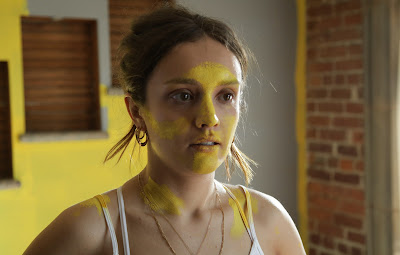
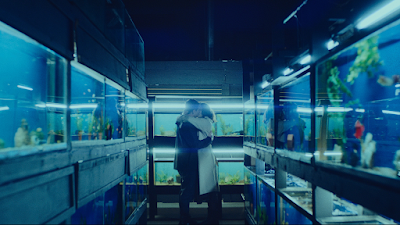
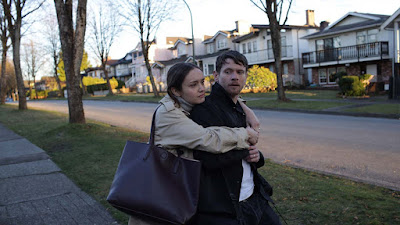
In this indie drama, there's a global pandemic (I know, I know, but bear with me) in which people lose their memories for no discernable reason. Pilots forget how to fly. Musicians forget how to play. And loved ones forget the people they love. Jude and Emma (Jack O'Connell and Olivia Cooke) are a married couple. And when Jude gets the disease and his memories begin to fade, they fight to figure out how to save their relationship. 

I could tell how it would end from the beginning. And I wouldn't call that a flaw, but it did lead me to pay careful attention to the movie overall, and that led to noticing a few things that felt wrong or uncharacteristic. Firstly, there were some covid similarities that were so unnecessary I wonder if they were intentional. The disease isn't contagious from person to person, yet one scene inexplicably has characters wearing medical masks. Why? For that dramatic moment where he rips it off? Or just to annoy me?

But that's superficial. More seriously, there were characterization flaws that did more than irk me. One undermined the movie's thematic argument, it made so little sense. It was a good plot point to give Jude the opportunity to participate in a clinical trial, but not let him go through with it. When he decides not to on his own reasoning, it makes sense. When the trials are successful and he regrets it, it makes sense. It even makes sense to try it illegally later when he's getting desperate (though in real life I'd expect a lot of doctors would do it on the down-low and he wouldn't have had to ask Emma.) But it doesn't make sense at all when they reject him after he changes his mind because there are drugs in his system.

Because the movie's thematic argument is that people aren't defined by what they can remember about themselves. Emma's worry is that their relationship is based on shared memories, but the movie definitively declares that that's not true by the end. Yet it asks us to believe that Jude would relapse after five years of sobriety just because he bumped into an old friend one time? The movie wants us buy that he did this unimaginably out-of-character thing, and declares it reasonable because he can't remember doing it. But no—whether he remembers it later or not, he was always the same person, who had stopped using for good. I feel like I'm missing something here too, because we're never told why he decided to quit, though Emma asks him. We're never told what might tempt him back. We're told he would never, ever, ever, and then we're told that he did. And it all could have been avoided by having the clinic fill his spot before he changes his mind. 

Inconsistencies like that bother me even more in films like this, because for me, the appeal of films like this is to put realistic characters in a strange, heightened situation and watch how they react. The point is to push them to do things you might not expect them capable of, but the study is ruined if they act out of their established character for no reason.

On to the good things. I love Olivia Cooke. She's a fantastic actor. She fits the movie perfectly. And Jack O'Connell matches her. They're a great centerpiece for the film, running through tons of emotional variety and generally being engaging and believable characters who I enjoyed following through their story. The cinematography was lovely. I loved the way scenes would alter as they remembered different or wrong things about the past. And it kept me on my toes to have the timeline not totally linear. It's tonally depressed, but not in a dark or bleak way. It's sweetly sad and relaxing, and ultimately positive and hopeful. And I love the message it brings, even if it doesn't stay on point and accidentally undermines itself in the middle. It wraps up nice and neat, and fortunately for it, if the beginning and end of a movie tie so closely together, that's what I'll remember best. 

Not a perfect film, but a fascinating, thoughtful, and appealingly artistic one, great for people who are fans of using high-concept premises to tell introspective character stories.

Sunday, September 26, 2021

A Quiet Place Part II

Some spoilers, for this and A Quiet Place.

If you call it a "Part 2" it's easier to make people swallow that it's not just another unnecessary sequel. Heck, even I got drawn in, and I despise the idea of sequels as a rule. What got me interested though, was adding Cillian Murphy to the cast to fill the hole John Krasinski's character leaves. Krasinski is still directing though, and this time he's also writing the whole thing. For the first movie he bought and tweaked an original script, and now he's trying his hand at expanding the story alone.

It's debatable whether the story wants expanding in the first place, let alone if the continuation settled on is any good.

We pick up exactly where we left off (after a flashback prologue). Emily Blunt and children leave their farmhouse to find one of their neighbors whose fire they would see from their water tower. This is Emmett (Cillian Murphy), but he's not as interested in playing father figure and man-of-the-house as the Abbott family wishes. He's already lost his family and is now a Joel from The Last of Us, lone wolf type character. However, Regan (Millicent Simmonds) has her hearing aid device that incapacitates the aliens and when she finds a radio station that is still broadcasting, she's determined to use it to help other survivors fight back. When she leaves alone, Emmett finds himself going after her, and then along with her, despite his protests.

The story splits then into two plotlines. The one with Regan and Emmett is interesting; straightforward in its goal, with ample opportunities for exploration. The one with Evelyn (Emily Blunt), Marcus (Noah Jupe) and the baby, however, is small potatoes, with no goal at all other than to survive when the aliens inevitably find them (after a year and a half they're still terrible at living quietly.) It tries to give Marcus an opportunity to become a man, but must make him even more of a frightened useless child first to make the change clear. It smacks of fishing for story filler rather than letting the story push along at a natural pace. Because both plotlines were focused on equally despite unequal value, neither was developed fully.

Abandoning Emily Blunt's plotline altogether would've been a crazy, bold, and I think rewarding, move.

The Emmett-Regan plotline could have been a movie all in itself, but it had corners cut to make room for the pointless other plotline. Everything happens too fast for them, and comes too easily. The two have a lot of potential together, and I liked their chemistry, but they slip too quickly into a father-daughter dynamic, especially after Regan's rough relationship with Lee, turned to deep loyalty. She initially rejects even the idea of Emmett becoming even a temporary protector. Then warms to him after one incident. They also have a language barrier, in that he cannot sign. This is got over easily and is never an issue in high-stakes situations. Then an evil tribe of cannibals is set up as a non-alien threat, but only amounts to one scene once they show up. 

It's rush, rush, rush, and then it's over and I can list on one hand the important things that were accomplished. I don't even need all five fingers! If it needed to end at that point to allow Part III all the plot it needs to wrap things up, then why not let this story sit back more and develop relationships? Why not explore the themes of family further, instead of leaving themes out altogether? Did Krasinski not realize those were the things that made the first one good? Or is he simply incapable of creating on that level? He is a good director, but he needs a good script with clear purpose, else his movies lack direction, and those satisfying moments of resolution that made A Quiet Place stand out.

"More of the same," but only superficially, isn't really more of the same, is it?

I feel like A Quiet Place Part II's only purpose was to set up the pieces for A Quiet Place Part III, so I guess I'll hang on and see how the payoff goes. Despite the definite downgrade in writing, this movie maintains its winning premise, with the same intense alien thriller feel to it, and tentatively expands the lore on its featured creatures. The mortal flaw is simply that it's lazier; messy next to the lovingly crafted original. Even with nothing to do Emily Blunt is good. Millicent Simmonds steps up her game to great results, and Cillian Murphy is a vital addition that makes the whole endeavor better than it has a right to be. If nothing else, I'll watch Part III to see more of him. 

Sunday, July 4, 2021

The Tomorrow War

Spoiler-free!

Chris Pratt's first time producing a film is exactly the sort of movie we'd expect him to produce. It casts him as a nice but slightly malcontented suburban dad, wishing for a little bit more to life in the year 2022. Then people from 2051 show up, saying that they're losing a war with evil aliens in their time, and ask for help fighting them. It's not long before a worldwide draft is instituted... and we all know Pratt eventually gets his chance to "be more" as he wishes.

Wish granted! You get to risk your life to save humanity itself! Probably more than he had in mind...

This is a blockbuster flick, no doubt about it, and the movie is proud of that fact. But it's also a time-travel oriented scifi movie, and it takes pains to explain itself on those fronts. It includes neat details in its worldbuilding, like, the people who travel back in time are young (not born yet in 2022) and they only recruit people who die before 2051. Cuz, you know, the space-time continuum. It's explains its time-travel method succinctly, and it's not without holes and paradoxes, but the rules are clear, and that's all we ask for.

Scientific explanations breezed-through, the movie gets right into the action. It's about sending nearly-untrained civilians into battle with animalistic aliens that shoot spikes out of tentacles (not to mention their sharp teeth) so there's a lot of general mayhem, but fortunately Pratt's character served in the army before, so he takes the lead and is assigned a mission, which leads to more specific encounters catered to the movie's needs of plot-momentum, and memorable action set pieces. None of the action was outstanding, but the aliens were cool and frightening, and the characters fighting them weren't cardboard cutouts, so it did the job being entertaining.

Surprise surprise, stakes that are imbedded in the plot are more effective than tacked on ones!

I can take or leave action most of the time. Unless it's Tom Cruise doing impossible feats on screen, it's hard to impress me. But no matter the genre I always go in for characters. And it's been a while since a brazenly extra-buttered-popcorn blockbuster presented characters that I cared two straws about. It helps that Chris Pratt is Chris Pratt. His acting consists mostly of hamming dramatic looks for the camera, but his own genuine personality bleeds through so well that it works anyway. Next to him, Yvonne Strahovski and J.K. Simmons are good and fantastic actors respectively, and they bring their characters to life as well. Between the three of them (and Edwin Hodge who was good but needed more screen time) they imbed the action with stakes worth caring about.

It got to the end, and I really was leaning closer to the screen, wondering what was going to happen. Most of the plot was predictable—I'm proud of myself for calling one slight twist early on—but the way they do the predictable things were always fresh and unexpected. The predictability played into the traditional blockbuster feel. It had a Cowboys and Aliens vibe to me, another movie that knows how outlandish it's being, but still goes in 100% and makes it all work. The three-act structure is clean and by-the-book which I love to see in movies like this, and it doesn't fall apart in the final act. In fact, the final act was my favorite section of the movie altogether.

Sad that cliché has become a dirty word. I want to say this movie was cliché and mean it as a recommendation!

Every blockbuster should go out on a bang. Even if it drives home its message with a heavier, less nuanced hand, that's better than having no message, or having a pandering sermon instead of something uplifting. And pulling off a few clichéd maneuvers is infinitely preferable to robotically manufactured originality. This movie goes by an outdated playbook, and I couldn't be happier. There's heart, humor, characters with arcs, a plot that a human person with human feelings made up with their human imagination, and Chris Pratt lends his warm affability to the whole ordeal. A genuine blockbuster in 2021. Time travel is real after all!

Monday, November 30, 2020

A Rainy Day in New York

Spoiler-free!

Timothée Chalamet plays the Woody Allen archetype and Elle Fanning plays the most annoyingly hyper and ditzy girl imaginable in this laid-back amble through NYC—and they do pretty good job at it. 

It's kinda like if an AI copied Woody Allen. And that's kinda part of the charm.

They go to New York from their upstate college; Elle for business (she landed an interview with a semi-popular artsy filmmaker) and Timothée for pleasure (he loves New York, naturally). They part ways, planning to meet up later. Typical Woody Allen hijinks ensue. Quirky, ponderous monologues are made. The two characters meander from place to place, finding and losing other odd characters played by other famous actors as they get into and out of niche situations. Liev Schreiber, Jude Law, Selena Gomez, Diego Luna, Cherry Jones... It rains. Then an ending place is reached and the credits roll.

It's par for the course on Woody Allen movies. If you always like his style, your mind is made up. If you always dislike his style, likewise. I'm in the middle somewhere. Watching this thing breeze by, it felt meandering and pointless, though not unpleasant. The cast was nice. Even Elle being annoying was intentional and had amusingness in it. Timothée was a little more relaxed into his role than he sometimes is. (It's not a try-hard acting part.) He comes across a little pretentious at first then warms as we follow him through the day. I was lukewarm on it overall. But then the ending shone a different light on preceding events.

This movie is all about the journey, but my taste in entertainment relies (perhaps too much) on destination.

I guess that's the thing about Woody Allen. You know to expect the meandering, the monologues, the old music. What you don't know is whether the plot is going to work for you or not. With a plot as meandering and distracted as this one felt, it seemed capable of going anywhere—until it got to where it was always going. And I have to say, I liked the destination. I liked it so much that my lukewarm feelings have turned into something more substantial. Something more distinctly positive. Something I wouldn't mind wandering through again someday.

I think that's all this minor jaunt was intended to be; I won't bother it for anything more.

Tuesday, June 16, 2020

The Invisible Man

Spoiler-free!

Cecilia (Elizabeth Moss) escapes from her abusive rich scientist boyfriend Adrian (Oliver Jackson-Cohen) and holes up with her friends (Aldis Hodge and Storm Reid) in their house in abject terror. She's sure he'll find her; he said she could never leave him. Finally, her sister (Harriet Dyer) brings the news that Adrian has killed himself, and everything's okay now. Tentatively, she starts to feel more comfortable. But why does she still feel like she's being watched? Slowly she discovers the truth; Adrian isn't dead, he's just invisible. Either that, or she's crazy!

This modern re-imagining comes from Leigh Whannell, the writer/director of Upgrade.

I loved Upgrade and was hoping The Invisible Man would be a similar, self-contained and lean thriller. It's not, but it doesn't totally fail to produce a palpable style of its own either. That being said, cleaner plotting could have only been an improvement. There are several threads that I waited to get answers on that were simply ignored--as if I wasn't supposed to expect explanations at all. I was out of sync with the movie's direction. And that came through with Cecilia's decisions sometimes, too. The movie is good to not expound on her every inner thought, but she often did things where her reasoning was foreign to me. It took the movie in unexpected directions, but also left me playing catch-up more than once.

The good comes directly from the premise. A stalking ex with bad intentions that the heroine literally cannot see. The best scenes are the ones where you know he's there--somewhere!--but cannot tell where. These scenes play like horror movie that have slow rising tension that leads to a chilling moment, and one step closer to breaking for the protagonist. And seeing that from what's technically a science fiction thriller is a pleasantly unique experience. I wish more of the film had been like that, because when the movie is less restrained, it leaps over into ridiculous territory for a frustrating decline of smarts and quality. 

We're told that Adrian is a genius, but the way he turns Cecilia's sister and friends against her is so mind-bogglingly simple that it belongs in A Cinderella Story 7: A Disney Channel Original, not movies with rational adults as characters. This movie sacrifices reason and the semblance of reality to heighten the stakes and tension, but for me, it deflated my investment in the story. What I wound up enjoying instead was the technical aspects of the film. Style, the building of tension, acting, and the unique appeal of the scenes where evidence the invisible man is present. Even that decays; but ultimately the final act sets everything back on track and closes the film out in a concise way, in line with the best of the film.

I liked when the camera would show you all this extra space like this and ask that you look for what's not there. 

It ended so well that I almost forgot about all the threads I wanted answers for but wound up being skimmed-over plot holes. I wouldn't mind so much, but several of the unanswered questions are asked by the movie itself. Whether it was meant to be tidy or not, the messiness was a distraction to me, and a detriment to the film. Yet Cecilia is a good character and Moss plays her engagingly, on the line between sure and insane. The insanity seeps over to the audience with strong visual design, and several well-crafted moments. In short, the movie delivers what it promises--just not 100% of the time. And you'd think a film that has cracked the code to invisibility would be more adept at hiding its flaws. 

Wednesday, December 25, 2019

Star Wars: Episode IX -The Rise of Skywalker

Spoiler-free!

Thank the Midichlorians it's over! When it was announced that J.J. Abrams was chosen as the director of the closing film for the Sequel Trilogy, I predicted that he'd attempt to please both fans and non-fans of The Last Jedi at the same time. A noble intention, that in retrospect, was doomed to fail. In his desperate endeavors to be as pleasing as possible, he was as safe as possible. But because of the groundwork laid down by his predecessor, even the safe answer was a risk; not so easy as a simple Copy/Paste of the classics. He had to tell the story as he saw fit, while moving forward with the story and characters from a starting point that probably intimidated him. Is it possible to tie together such a disjointed trilogy into a conclusion that holds together? Yes. Is it possible to please everyone? No.

Time for Rey to find her place in all this. Whether you like it or not!

In the end, I'd rather watch two hours of fanservice than be insulted for two hours (though neither are ideal) so The Rise of Skywalker comes out on the positive side, but not without the additional odor of Retcon. None of the films in this franchise respect each other, and the flow between them is understandably rough. Abrams spends half the film clawing his way back to a vision he can work with -- essentially making two films worth of content fit into the run time of one. It's rushed and messy; shaved of every second it could spare, and never given a moment to rest. But then he finds the place in which he wants to work, and around the third act everything settles into a compelling story again. Only one thread hangs on, fraying but intact, to tie the three films together; and that is the arcs of our heroine Rey, and her villain, Kylo Ren.

If I had my pick of any one thing to keep consistent between the films, that would be it, with no second place. That's what Abrams nailed down in the end, and though it's not exactly the way I would have written it, it works within the frame of both the movie and the last two movies' baggage -- and is genuinely good storytelling from a character perspective. Despite holes in the plot, I respect that. Rey (Daisy Ridley) will still be called a Mary Sue, I'm sure, but Abrams provides a reason for her exemplary untrained skills, and completes her arc with care and dedication. Kylo Ren remains the best written character of the sequel trilogy. Adam Driver doesn't have a pages of dialogue here, and even spends extended amounts of time in silence when you wouldn't expect it. With the solid foundation of the character, and Driver's talent for expression, Ren thrives under the treatment. He is the film's boldest choices, and its greatest payoff.

Rey and Kylo are the heart and soul of the film, which is the most important thing. Also, this movie has more than one lightsaber duels, and that's very important too. 

As for my used-to-be personal favorite, I was glad to see Poe (Oscar Isaac, who actually drew a short straw when he won a part in Star Wars) fulfill the role he was originally written for; "the Han Solo type." He keeps the temper Rian Johnson gave him while piloting the Millennium Falcon, flirting and quipping, and finally feels realized. And yes, he and Rey interact. Finally. I almost didn't even notice, and that's exactly how it should have been from the start. John Boyega's Finn unfortunately takes more of a backseat, having done all his growing in The Force Awakens. You can sense that there's no clear vision for the character, but he isn't in the way either; a welcome presence. While feeding the fans lines to placate them once, Abrams said that Rose was the thing Johnson did that he was most grateful for; watching the movie, that's clearly not true.

What I would guess Abrams is really most grateful for, is the establishing of Force Skype Calls -- or the connection between Rey and Kylo that allows them to interact at distances. Abrams takes it a step further in a neat way -- one of the movie's most creative ideas -- and useful to the plot, too. In fact, it seems most of Abram's creative choices here stemmed from working through choices that Johnson made. Sometimes it leads to the fulfillment of themes that I found impressively intuitive and subtle considering the action beats coming across like a cartoon hammer to the skull -- and sometimes it results in blatant retconning. Sometimes both at once! The movie is a mess because of it, but also not as milquetoast as it might have been had Abrams been allowed to merely execute a soft remake of Return of the Jedi. A fascinating trade-off, and something for which I'll gladly thank Johnson.

This movie elevates TLJ, but also wouldn't have happened without TLJ, so I guess really, they elevate each other -- and through that counterintuitive route, that means they succeed in doing what trilogy parts were meant to. 

We could spend hours in Whatifland, but I'll forgo it. This trilogy could have been many different things, but this is what it is: Abrams'. He has staked claim and it belongs to him. He did what he thought was best, and if it wasn't, I'm far too tired to devise how. Given the circumstances, this film is closer to a best-case scenario than I ever dared hope it'd be. The whole trilogy was a long series of stumbles, insecurities, misunderstanding of fans, and conflicting ideas, but, almost miraculously, the ending doesn't fall apart. It gets to where it was going. It makes it to a real end. I could mention that the end it finds is more than decent; far from dull, and at least in the ballpark of a resonating and moving story. (At most I got misty-eyed yesterday just thinking about it.) But all that's a mere bonus at this point. For most films, making it to the end of the story is a given; but given the disastrous road this one has endured, I cannot think of a better recommendation than to point out the end that this giant, turbulent, space adventure possesses, and say, "They did it."

Thursday, September 19, 2019

It Chapter Two

Spoiler-free!

What's more likely to be a great movie -- one that ends with the characters making a promise to return and fight the evil again whenever it may return, or one in which all they do is make good on that promise?

Directed, once again, by Andy Muschietti.

Given that Chapter Two and Chapter One come from the same singular book, Chapter Two has no real right to feel so much like a sequel. Ideally it should have a "Part 2" flavor. If the filmmakers knew how successful Chapter One would be, I bet they would have filmed both parts at once. Then the de-aging of the child actors wouldn't have been necessary, and the story could have been developed to flow better between the two films. As it is, the two parts feel out of sync with each other. One being bigger in size, and the other more compact yet weighty with substance.

Much like what happened with Season 2 of Stranger Things, this sequel is painfully aware of the wild success of its predecessor. You can see it in the kids' performances, who are much less organic here. Like they're putting on a show for an audience instead of digging into honesty and stretching their acting chops. And while the adults don't come across that way at all, their script does it for them on occasion, with throwaway callback lines. Such as when they go in the well house and Bev dryly proclaims, "Beep beep, Richie." Another thing the adults have going for them; they're way better at delivering comedy.

As a result, the adult's version feels lighter in tone.

Laughs came freely; as for scares, it hit Not Scary At All for me. They tried to match scary-levels with Chapter One, but the method degraded slightly; there are a lot -- and I mean a lot of jump-scare moments. And every single one of them follows the exact same pattern. 1. Thing might be scary. 2. Thing is maybe not so scary after all. 3. Pause pause pause... 4. THING IS SCARY! Inevitably, the thing morphs into CGI, half the time with aspects of Pennywise's face pasted on it. I actually prefer when horror film don't scare me, but it does bother me that so much time was spent of these ultimately useless moments.

From my perspective "scary" is a lot less important than simply "effective." And the only times these moments were effective is when it led to an actual kill. Those are the ones that take their time to craft the creepiness and the dread. The most effective part of the movie was waiting for a jump scare while the camera lingered on Bill Skarsgård, motionless, drooling, his one eye pointing out to the side. No CGI, just an effective performance, given time to breathe and settle before it bursts. Other horror elements were more varying degrees of cool, or neat, or messed-up, which works fine for me. Overcrowding and rushing were the problems there.

But casting was a resounding win!

I think it's universally acknowledged that the casting here is pitch perfect. Even the well-known actors, Jessica Chastain, James McAvoy, and Bill Hader are fantastically spot-on. Isaiah Mustafa, Jay Ryan, James Ransone, and Andy Bean were clearly cast more for their accurate appearances, but also deliver wonderfully on the performance side. Hader steals almost too many scenes, and my favorite was Ransone as Eddie. The best scene in the whole movie was their meeting up and having dinner. Their reactions to seeing each other again and how the nail the same feel and dynamic their kid counterparts did.

A better version of this film is out in the cosmos somewhere. I don't know how it works, but it likely required at least some changes to the first movie. It's a hefty story to swing in just two movies, so one great film and one slightly less-so isn't a disappointing result, especially if you consider less pleasant alternatives. This two-part series avoided disaster by breaking up repetitive material with elevating moments from a brilliant cast, and regular interludes of real, fascinating, quality content. My only real regret is that Chapter One ended in a more satisfying and thematically potent way.

No more floating, but I sure do hope Bill Skarsgård gets all the roles he could wish for after this!

The best ending of a series ideally belongs at the very end. But I loved Chapter One as is, so if that movie's greatness required this one to fall slightly short, I'll take it and be happy. Since this continuation isn't necessary to get a complete and satisfying story, there's no harm done either way. It Chapter Two is like the cherry on top of a giant sundae, or a red balloon in the hand of a clown; it doesn't add much in terms of substance, but it sure does complete the picture nicely.

Tuesday, September 3, 2019

Ready or Not

Spoiler-free!

Don't make pacts with the devil for success and riches, kids. If you do, it will only end one way: with laughter and splashing blood. The laughter won't be yours, but the blood probably will be.

It sure does make for entertaining fiction, though!

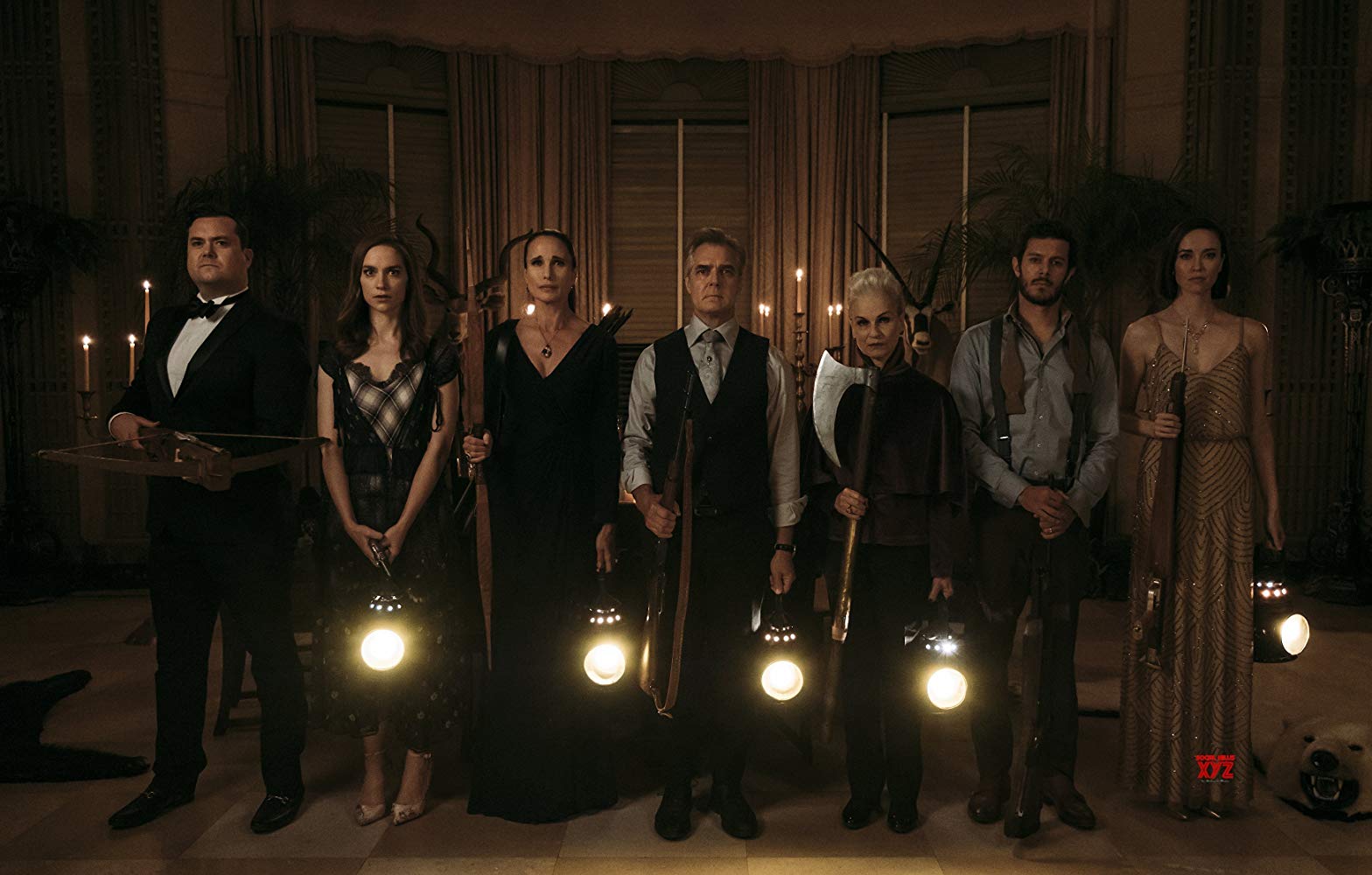
The Le Domas family did make a pact with the devil for riches. Specifically, a game empire. As part of the deal, anyone who marries into the family must draw a magic card and play the game written there. But if they happen to draw the game Hide and Seek, they have been chosen to be a sacrifice and must be killed before dawn. That's what happens to Grace (Samara Weaving) when she marries Alex (Mark O'Brien). And she's not happy about it.

When a movie has a premise this good, it seems a terrible waste of it all to make the ultimate point simply that, "Rich people are crazy." Make a movie -- any movie -- in which a rich family worships Satan and sacrifices their in-laws to him and you'll get that point across. About the third time you reiterate it, I'm going to start wishing you had something more to say. This movie does a great job defining its villains, showing their motivation and the depths of their selfish, evil ways. But it doesn't balance all that with equal amounts of good.

Only one character does something selfless in this movie, and it's not the lead.

Grace is a solid heroine and easy to root for simply because she is over her head and fighting to survive in a wild situation. She's also scrappy and unrefined, details that I liked. A solid character. In a great dress! But she only ever protects herself. She lets others sacrifice for her instead of risking herself for anyone, and doesn't quite come into full hero status before the film ends. I can only suppose the end intended to be spiteful; there was a clear and far more satisfying path there that was ignored in order to stubbornly eek out the desired result.

So it's unfulfilled, but as I said, the premise is strong. Strong enough to carry the movie well into the third act before you realize it has strayed from the mark. It could have been funnier throughout as some of the jokes were a little cheap. The good humor came from a sharp wit and I could have done with ten times more of that. But the tone struck was fitting; with high drama and high energy, but not too flippant as horror-comedies are so often in danger of being. I mostly wish it hadn't fallen back on the old "saying the f-word makes it funny" trope.

Its swearing comes across like a kid trying to be edgy.

The premise could have gone off in any number of narrative directions, and though I don't think they chose the best route, I also think they were very far from the worst. I was always engaged with the action though it wasn't exceptional in either concept or execution. And several of the characters had great arcs, or little backstory tidbits that brought depth to the story. It was the attention to character early on that made the conclusion feel so incomplete later.

I don't think it was due to my already being a fan of Adam Brody that made Daniel my favorite. He hit the movie's dark wit most consistently and took the best character direction. I also liked the direction Alex took; and Andie MacDowell's mom character. Then quirk characters like the hyper sister or grumpy aunt worked great to keep all the characters straight and keep the humor going. And like I said the lead was super solid; the thing about this movie that lingers in the mind once it's over. Even though she shoulders much of the film's flaws, she takes it all like a champ.

It reminded me at times of The Cabin in the Woods, and I wish they'd gone even further in that direction.

Not up to the standard of its greatest peers, but no slouch either, Ready or Not is a mixed bag that doesn't jive with its either/or, black and white title. Neither a winner nor a loser; but at least genre fans can be happy the game was played.

Saturday, July 6, 2019

Spider-Man: Far From Home

Spoiler-free!

I think Far From Home is supposed to be the last MCU movie of the current phase, but after Endgame, it feels like starting the cycle all over again. All Endgame changed was the change implemented by Infinity War, and now we're back to our regularly scheduled MCU programming. Here come the Marvel jokes, the wasted potential, the overused CGI, and worst of all, the obligation to make the sequel "bigger."

5 years later, and still waiting on a movie worthy of this guy.

So, we get an enhanced rehash of the first movie that lacks the grounding that the Queens neighborhood provided before. Spider-Man (Tom Holland) goes international when Nick Fury (Samuel L. Jackson) hijacks Peter's class trip to Europe so he can help Jake Gyllenhaal fight elemental monsters from an alternate universe. With a little doing from the writers, Peter's class country-hops along with him, getting into danger with every fight so he has something real to worry about. That, and whether he's ever going to find a moment to tell MJ (Zendaya) that he likes her. 

Though the last movie's romance was much more integrated in the story, at least we get to be invested in Peter's crush on MJ because she comes with the promise of a future built in. Tom and Zendaya are a great paring. Very cute; lots of chemistry. I would've happily watched a whole movie about them. But no such luck. The movie does what all MCU movies do and gives us the bare minimum of relationship progress and just enough cute moments to keep people like me from rioting. MJ shares the "sidekick" slot with Jacob Batalon's Ned, and they both play second fiddle to Mysterio and Nick (and even Jon Favreau's Happy Hogan) and the threat that's at hand.

Instead of Peter having to figure out how to superhero during the tour, the tour is catered to his superheroing.

The threat is handled well with only a few corners cut, which is nice since it takes so much precedence. There was one scene of blatantly unnecessary exposition that, as far as I was concerned, didn't do a good enough job conveying motivation to justify the length and detail it goes into. Props to the writers for trying to think so deeply, but it wasn't worth all the trouble. Then the monsters are ho-hum; merely functional as things to fight. There are also some Mysterio-style psychedelic moments that are cool, if overly CGI. One was exactly like the title sequence of a Daniel Craig James Bond movie. As far as classic Spidey-style fight choreography, not much to speak of. The scene where Peter fights in his street clothes was probably the best.

As objectively fine as all this big, expanding stuff is, I couldn't help but miss the down-to-earth quality that Homecoming strove hard to maintain while the franchise breathed down its neck. Now the franchise has taken over, and even threatens to make Pete the next "Iron Man" -- having him use Stark tech for all his superhero needs, and even imitate Tony's style of interacting with the smart computer. At one point he gets stranded, but Happy and a Stark plane is only a phone call away. I missed the moments where he has to work out the problem on his own, without anyone to call or tell him what to do. Because that's what's compelling about Spider-Man.

(They trashed Karen without a word of explanation, but even she is preferable to humans trying to dictate his every move.)

Those are the times you see how smart, capable, and determined he can be, even though he's just a scared teen. Sans those moments, this Spidey is dumber than ever, and hardly seems capable of doing anything that isn't either a giant mistake or cringe-worthy. And in one unnecessary sequence that made me want to die, he does both. He also runs out of webbing for no reason so that the final battle would be an even match. The real-life stunts are severely lacking, the CGI'd suit more distracting than ever, and Tony Stark's name is defamed for the sake of plot; the whole movie is just a mess. Homecoming was a mess too, yes, but smaller and more personalized. 

Far From Home is exactly what you'd expect a more-of-the-same sequel to Homecoming to be, except in one important aspect: Because Homecoming won me over by making his fight personal, and making him face the villain alone and downgraded. There was no such winning hero-moment in this. They rehashed everything but failed to recreate the magic of that film's third act. This one's third act is good; fine. The MCU formula assures that. But it lacks grounding, personality; heart. The movie is bigger, and the winning moments are smaller. They're contained to fleeting moments and occasional one-on-one, CGI-free scenes of dialogue. Peter and MJ. Peter and Happy. Peter and Mysterio. 

Of course it breezes by all the moments that I wanted to linger.

The Peter/Mysterio scenes are quite good. I forgot to mention but Jake Gyllenhaal is dynamic and compelling and an extremely welcome presence here. A little more romance, a little more overall focus, and just one more moment for a little heart, and I may have been won over instead of frustrated. If it seems a small thing; yes. That's exactly my point. Far From Home is too big, too formulated, and too distracted from what matters; missing too many of the small, little, lovable pieces that make Spider-Man great.

Sunday, April 28, 2019

Avengers: Endgame

Spoilers.

The least spoilery thing I can say to sum it up is: It's the same basic fan-servicing Marvel that we've been seeing recently -- but something's different, because I enjoyed watching it this time! But yeah, I'm not even going to try, friends. There are definitely spoilers here!

Endgame: the big secret. The actors knew nothing; no information was released during marketing; and fans go to extreme lengths to avoid spoilers before release day. Even I did it the "right" way and achieved about 97% blindness. And still. Not one thing was legitimately surprising. Maybe if I'd gotten an out of context spoiler, sure; but within the narrative of the movie, there were no shocks, or plot twists, or anything that you'd expect to be kept secret -- save for the mere two deaths. The OG Avengers use time-travel to bring back the dusted, defeat Thanos, and pass their torches to the next wave. Pleasantly straightforward.

I should probably mention that this doesn't help me look at Infinity War in an any better light. I wondered for a year if it might, but no.

Yep. I had fun. The time travel aspect was super comic book-y and cheesy in a nice way. They must steal the Infinity Stones from their past selves in previous movies and the Back to the Future Part II vibe was solid fodder for superheroing. Sometimes not used to potential; other times smart, neat, and fulfilling to the characters' individual stories. And the final showdown battle finally took this series to the scale at which they've always wanted to exist. Like comics brought to life. And when the ultra-high stakes come in (Thanos planning to kill them all) you instantly know the heroes are in for a satisfying win, so it's easy to settle back and soak it all up.

Tony is the most focused-on character. Fitting, since he has an ultimate end -- and started it all. He gets to marry Pepper, have a little girl, live a briefly happy life, have a restoring man-to-man with his dad, and then die a hero's death saving the whole universe. Nice. Cap was my personal favorite. Since time travel now exists, he lives out a normal life with Peggy. Nothing could be more satisfying. And I realize this is fan-service, with no veil or pretense attempted. I was primed to be okay with that fact by the continuous pulling out of the rug from under my hopes of simple enjoyment, and don't care if it worked. These were thoughtful ends that the characters deserved. About time they received them.

Throwback to when these two were the GOAT.

Even Natasha's death felt earned and meaningful. Her and Clint's friendship was one of the first things I fell in love with in these movies, and that scene they had together made it all conclude in a way that felt natural and right. The scene mirrors Gamora's Infinity War death, even with the same music, yet inverts aspects in profound ways. They fight each other out of love, which has never happened in the MCU before. The sad tone was uplifting, and the emotion unforced. Long-established and consistent characters dealt with respectfully. Strange to think that after using movie after movie to point forward to the next with relentless ferocity -- actual, final ends are given here.

But it's not all satisfying lovey-dovey goodbyes. There's Beer-Belly Thor, which is by far the worst iteration of Thor even conceived. The weight (unintended) of the abject failure he feels could have been so powerful were he not turned into a joke. The scene with his mother was nearly good even with that looming over it. On top of that, the "joke" isn't funny. I'd like to say nonsensical too, but I have no proof, so I'll just say it annoyed me -- especially after Thor was the greatest redeeming factor of Infinity War. I've always liked original Thor Thor best, so I wasn't expecting much... but that was just insulting.

Animated humanoids like Hulk and Thanos are impressive, but still fail to draw me in -- even in the way cyborgs and small CGI creatures do. 

I could devote a similar paragraph to Star-Lord, but I'll limit it to this: I hate, loathe, and despise what these films have turned Quill into. It makes me angry in a way that fictional things shouldn't, and this movie was the worst offender. The only mercy is his limited screen time. On the flip side, Nebula has never been more complex and involving. She continues to earn her spot on the team. Scott had the highest ups and the lowest downs: His reunion with Cassie had some of the most genuine MCU acting I've ever seen; and the time travel test was the "joke" that would never end. Yes indeed, the Marvel-brand jokes are still here, and bland as ever. It's impressive how deftly they skirted around Paul Rudd's comic abilities.

It's like the outline of the story had effort, with a nice and plain three act structure that kept the pace going, and thought-out building on past scenes -- but then the details were filled in by an MCU bot. Every tidbit and third line were a callback, and the rest stuffing. The dramatic scenes work by sheer force of will from the actors as they push real emotion through dialogue lacking any written personality. The Marvel-brand green screen and overly-CGI'd pastiness is at large too. The initial swell of the battle did have nice imagery with the portals though, and Vormir appeals, green-screened as it is. I genuinely liked one shot: the last one of Clint sitting in the water with the soul stone.

I thought it was nice how the movie was more or less bookended by farewell speeches from Tony. There is muddling around, but ultimately there's a simple, solid structure.

This movie exists because of past successes, like a greatest hit episode; no legs of its own to stand on, but enjoyable, nevertheless. Exactly what we expect from Marvel -- packaged as a tribute to those who got it started. The effort is nearly derailed by cringe jokes and mountains of CGI: There's lots of filler, lots of worthlessness, and lots that's recycled from the deep, deep, rut that Marvel has dug for itself. Sadly creative ruts aren't a factor for Marvel anymore. Their oodles of cash isn't earned due to quality craft, but to calculated marketing; and with these loyal fans, and the ability to fabricate and promote empty secrets, any kind of slop could've played on that screen and made the same amount of money.

Fortunate, then, that the slop they played for us was a relatively good time, made for pure, widespread enjoyment, and was relatively respectful; serving founding characters with one last dose of genuine progress and a hearty farewell. Almost not slop at all, at heart. Despite shortcomings and extended lapses into stupidity, at least there's a story here, used for the satisfying completion of the journeys of long-beloved characters. Despite everything, I'm glad I got to see the Avengers assemble for one last hurrah.