Pages

Sunday, January 2, 2022

Spider-Man: No Way Home

This review has SPOILERS concerning what characters appear in this movie. Plot-wise, it's spoiler-free. 

When the whole world is told that Peter Parker is Spider-Man, that doesn't turn out so well for Peter. But it's not until his best friend Ned and girlfriend MJ are tainted by association—rejected by MIT for reasons of "controversy"—that he decides to act. What he does, with help from Dr. Strange, doesn't turn out so well either. They open a rift in the multiverse, and people start filtering in who know that Peter Parker is Spider-Man. Strange, villainous people who Peter doesn't know. (But we do!)
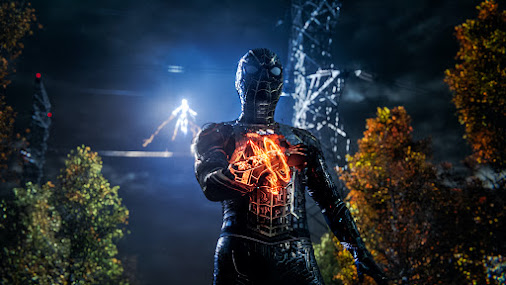
Time for Peter to make some choices and mistakes of his own.

I've long been on the outs with the MCU. But I have maintained a hope (a faint and fading hope, as Gandalf would say) that Tom Holland could make a great Spider-Man under the right circumstances. So even though I'm not interested in the interconnected Marvel universe anymore, I wanted to continue giving Spider-Man a chance—and I'm glad I did. My favorite aspect of Homecoming was that director Jon Watts seemed to be working hard to keep Peter grounded, even through the over-sized stakes and "bigger is better" and "connect everything" worldview that the MCU brings. In this third installment, Watts connects things, makes it bigger, and ups the stakes like he's supposed to, but he also has reason to. He uses the required method to give me what I want—a Spider-Man that isn't under the thumb of the MCU.

At least, not as much. This story asks the question, "what does it REALLY mean, to be Spider-Man?" and then it answers it, by using past Sony Spider-Man's (Spider-Men?) Spider-Men as the standard to be measured by. Tobey Maguire and Andrew Garfield make real appearances, not just cameos, and they're treated with reverence and respect. Holland's Peter makes well-intentioned mistakes and tries his best and then learns from the Spider-Men that his good intentions and trying his best is the Spider-Man way. He learns that bad things happen despite his efforts but is encouraged by them to keep going, because "with great power comes great responsibility." And his efforts cease to be a joke or some fun side-gig where he gets his suits made by Iron-Man, his missions from Nick Fury, and team-mates from the famous Avengers roster. He grows into a full-fledged Spider-Man, and it's a little bit glorious. 
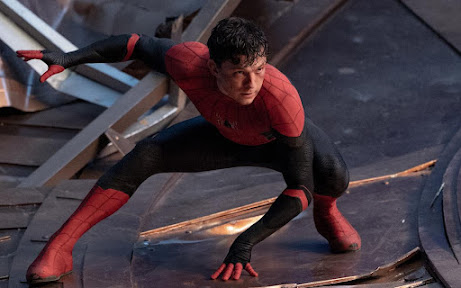
Holland has always been the best thing about this iteration. This movie aspires to be worthy of him.

The path taken to get him there... is a little bit messy. One by one the past hang-ups are put to rest. No more Stark glasses. No more voices inside suits. No more adults making decisions for Peter. No more villains whose real beefs are with Iron Man. No more double life. And with every step taken, the movie feels more and more like a classic Spidey film, and less like a Marvel drone. The jokes are funny sometimes. The characters are like real people, not awkward or unfunny on purpose. There are dramatic moments that aren't undercut by humor. There are humorous moments that have underlying pathos. There is an end goal throughout besides "make money with CGI." Gosh, even the more blatant fanservice moments didn't make me angry, because they were calling back to the old classics with genuine glee. 

It feels messy because the movie is about cleaning up a mess—in the storyline, and in real life! The process is not streamlined. There are moments when it's a chore, but the end result is satisfying in the same way all things are when they're clean and used to be messy. And as the mess dwindles, we get a look at how Holland's Spidey works unencumbered. And he's fantastic. Peter uses his fast thinking in creative ways during the fights, and Holland's physicality plus the magic of modern effects and choreography make the action land in real and entertaining ways. And the character dynamics between him and his friends and family take on a more serious edge as he weighs the consequences of his actions and relationships. 
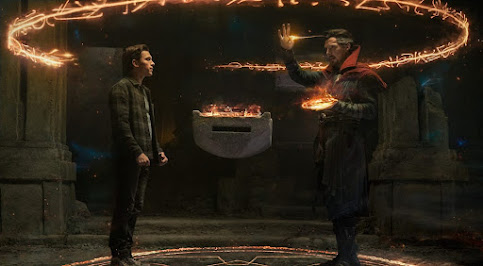
One of few MCU films that actually needs most of its 2 & 1/2 hour runtime. It's a big mess to clean.

The returning villains weren't my favorite thing ever, but I appreciate that they were not turned into jokes (which was what my cynicism expected) and instead added real value to the story. Especially Alfred Molina's Doc Ock and Willem Dafoe's Goblin. Spider-Men Maguire and Garfield steal the show, so I'm glad they aren't in the whole thing. Most of the movie's best, most engaging emotion comes from them—maybe because of nostalgia, maybe not. All I know is they leave the current Spidey in a place I'd like to see more of. It feels like a set-up for a fresh start. One that already has a good cast in place, and has proved it understands the Spider-Man mantle better than past endeavors indicated, and is ready to take the character in some more conventional, classic, SPIDER-MAN directions. 

No Way Home is a messy, sprawling, fun, and ambitious film with a determined goal, real stakes, real consequences, and a real end result. It stops trying to reinvent the character and embraces what's always been this version's strengths, while bringing back some of the classic strengths of Spider-Man, as well. It has brought our friendly neighborhood Spider-Man back to his friendly neighborhood life.

Saturday, January 1, 2022

Top 10 movies of 2021 Podcast!

HAPPY NEW YEAR 2022!!

A couple days ago my twitter friend Tyler (twitter, website) hosted me and our mutual friends Trevor (twitter, website) and Lindsey (twitter, website) to talk about our favorite movies of 2021—check it out below!

With how strange a year for movies 2021 was, we ended up having very different favorite lists, which I thought was awesome. It was a fun conversation, and a great way to send off the year!


Wednesday, December 29, 2021

Flashback

Spoiler-free!

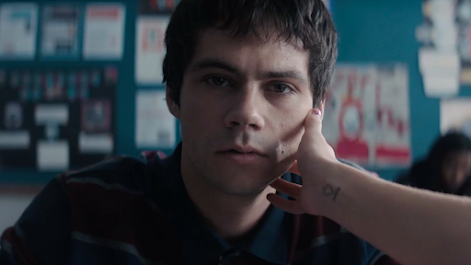
Saddled with the news that his mother no longer remembers him and will die in a few days, Fred (Dylan O'Brien) begins to fall away from his normal life, wife, and boring office job, going on a mental odyssey through his past to find out what happened to a girl he forgot he knew in high school, who vanished after they took a perception-altering drug the night before finals.

Written and directed by Christopher MacBride.

This unexpectedly wise and thoughtful film is a drug trip movie—and it GOES FOR IT. Its focus on mentality and non-linear structure reminded me of Charlie Kaufman's writing. (I'm Thinking of Ending Things, Eternal Sunshine of the Spotless Mind) But instead of Kaufman's fantasy-like quirkiness, here it feels like science fiction, and goes so far into the weird, the trippy, and the unreal, that it touches on horror. It genuinely frightened me in a way a horror movie never has. It plays like suspense and drama, with nothing explicitly scary happening, but because of how hard in leans into the creepy side—this semi-scifi underworld that's down the rabbit's hole—it becomes effectively terrifying and disturbing on a mental level. Watching it felt like entering a shifted state of reality, or a nightmare that you think is real.

There is this glorious, relentless use of match cutting that I absolutely love. The plot tends to stay with two main timelines, and with the constant use of matching as the movie cuts from one time to another, the plotlines of past and present are tied closely together, to the point where they become one plotline rather than two. The bleak, subdued tone helps the suspense get under your skin, and the muted colors brings out the subtle ethereal quality. There's a masterful balance of information reveal. Though the plot is complex and ungrounded in physicality, it's intentional about the information, clues, and details it's giving you. I always knew what was happening, yet was always confused enough to want to understand more. It never explained itself in so many words, yet I always felt in sync with what it was saying.

Dylan O'Brien's acting skill continues to impress. I have this perception of him as an action lead, (which he cultivates, obviously) and certainly he's great at those, but that makes him an unusual choice for a movie about a mental journey. He brings his innate physically and high energy to this more subdued role, and it adds another whole layer to the project. His pressurized performance heightens what might become dry and flat under someone more low-key. Even though the movie is ethereal and bleak, there is an underlying sense of immediacy and urgency throughout, and O'Brien brings that out in a natural way while still being able to play into the dull discontentment of the character. 

I got a lot out of it. Its themes and moral arguments, from my perspective, were brilliantly presented and never for one second preached. I felt like I was discovering it myself, as if I shared in Fred's revelation. Someone else may find the point or the main idea to be slightly different because of the subtlety, but whatever you may see, I think it is universally an encouraging conclusion—and emotionally rewarding to a degree few movies achieve. Even if you don't pick up exactly what I did, or exactly what it was laying down, there is clear intentionality behind the presentation. It was thoughtfully and indistinguishably woven into the story. The set-up hidden until the payoff, so we don't see where it's going until it gets there. And wise in choosing a destination. 

Wise. It seems odd to use that word to describe a drug trip movie, but here we are—and I mean it. There is not only smarts and skill used in crafting this freaky, creepy, and heartfelt film, but wisdom, too.

Wednesday, December 22, 2021

Little Fish

Mild spoilers.

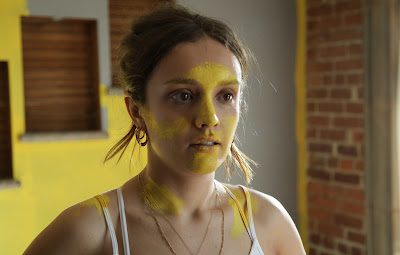
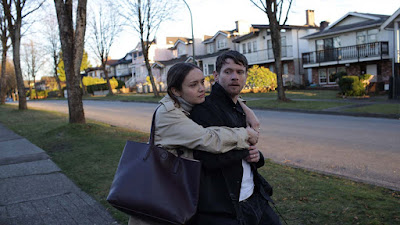
In this indie drama, there's a global pandemic (I know, I know, but bear with me) in which people lose their memories for no discernable reason. Pilots forget how to fly. Musicians forget how to play. And loved ones forget the people they love. Jude and Emma (Jack O'Connell and Olivia Cooke) are a married couple. And when Jude gets the disease and his memories begin to fade, they fight to figure out how to save their relationship. 

I could tell how it would end from the beginning. And I wouldn't call that a flaw, but it did lead me to pay careful attention to the movie overall, and that led to noticing a few things that felt wrong or uncharacteristic. Firstly, there were some covid similarities that were so unnecessary I wonder if they were intentional. The disease isn't contagious from person to person, yet one scene inexplicably has characters wearing medical masks. Why? For that dramatic moment where he rips it off? Or just to annoy me?

But that's superficial. More seriously, there were characterization flaws that did more than irk me. One undermined the movie's thematic argument, it made so little sense. It was a good plot point to give Jude the opportunity to participate in a clinical trial, but not let him go through with it. When he decides not to on his own reasoning, it makes sense. When the trials are successful and he regrets it, it makes sense. It even makes sense to try it illegally later when he's getting desperate (though in real life I'd expect a lot of doctors would do it on the down-low and he wouldn't have had to ask Emma.) But it doesn't make sense at all when they reject him after he changes his mind because there are drugs in his system.

Because the movie's thematic argument is that people aren't defined by what they can remember about themselves. Emma's worry is that their relationship is based on shared memories, but the movie definitively declares that that's not true by the end. Yet it asks us to believe that Jude would relapse after five years of sobriety just because he bumped into an old friend one time? The movie wants us buy that he did this unimaginably out-of-character thing, and declares it reasonable because he can't remember doing it. But no—whether he remembers it later or not, he was always the same person, who had stopped using for good. I feel like I'm missing something here too, because we're never told why he decided to quit, though Emma asks him. We're never told what might tempt him back. We're told he would never, ever, ever, and then we're told that he did. And it all could have been avoided by having the clinic fill his spot before he changes his mind. 

Inconsistencies like that bother me even more in films like this, because for me, the appeal of films like this is to put realistic characters in a strange, heightened situation and watch how they react. The point is to push them to do things you might not expect them capable of, but the study is ruined if they act out of their established character for no reason.

On to the good things. I love Olivia Cooke. She's a fantastic actor. She fits the movie perfectly. And Jack O'Connell matches her. They're a great centerpiece for the film, running through tons of emotional variety and generally being engaging and believable characters who I enjoyed following through their story. The cinematography was lovely. I loved the way scenes would alter as they remembered different or wrong things about the past. And it kept me on my toes to have the timeline not totally linear. It's tonally depressed, but not in a dark or bleak way. It's sweetly sad and relaxing, and ultimately positive and hopeful. And I love the message it brings, even if it doesn't stay on point and accidentally undermines itself in the middle. It wraps up nice and neat, and fortunately for it, if the beginning and end of a movie tie so closely together, that's what I'll remember best. 

Not a perfect film, but a fascinating, thoughtful, and appealingly artistic one, great for people who are fans of using high-concept premises to tell introspective character stories.

Sunday, October 24, 2021

Dune

Spoiler-free!

The most immediate thought that springs to mind when I think of how to break down Denis Villeneuve's adaptation of Dune into something that can qualify how I recommend it, is that it's a movie for fans. It doesn't gatekeep; anyone can be a fan. But you must be willing to invest, and to pay attention. If it does its job right, it will bring the uninitiated into the fold, and endow satisfied customers with a desire for more—whether that comes in book form or in eagerness for a sequel. But no matter if you came as a fan, or are made into one by the experience, casual viewing is the riskiest way of journeying into Dune's vast, sandy landscape. 

I find it all a bit overwhelming even after reading the book and watching the '84 film (twice.) 

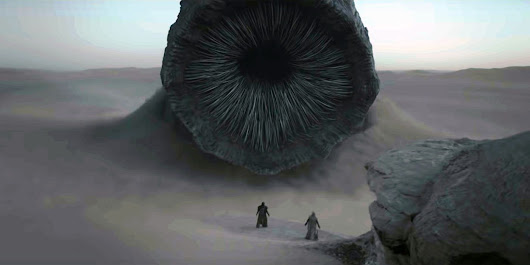
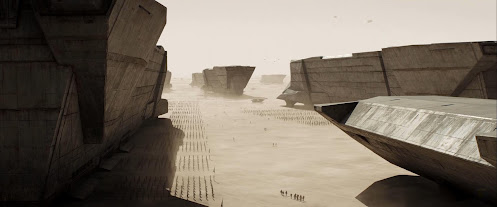
If you're not willing to invest the mental energy it takes to remember all the weird scifi names and terms, keep track of the medieval space politics, or care about characters who don't see their journey's end by the time the credits roll, then the only thing you're likely to get out of this film is a treat of big-budget visuals portraying the immense, looming and extreme fictional world. That alone is worth witnessing once, so I guess my recommendation is won. Still, with Villeneuve directing, great visuals were a shoo-in. My fear was that focus would be put on the wow-factor to the point where story and characters would suffer from boredom or pretentiousness. But no. Conversation drives the story, yet I wasn't bored for one second. And visual awe is turned up to the max, with dedication to relaying the character side of things keeping easily in stride.

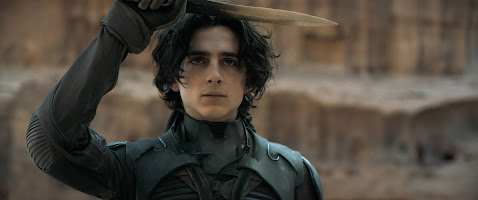
My biggest worry of all was the casting of indie darling Timothée Chalamet as the film's lead. I know he's an actor who actually puts stock into acting but there's no predicting my reaction to his roles and performances. And a Paul who comes across wrong is a fatal flaw. I was skeptical. But he proves to be a good casting choice, portraying an accurate Paul who is neither bland nor annoying. He reminded me of the book version and gives a lot, even through Villeneuve's style of preferring to film his characters still and stoic. Once I wasn't worried about the lead anymore, I knew I was in for something good, but the movie doesn't stop there.

Though it's giant, it's dedicated down to the details.

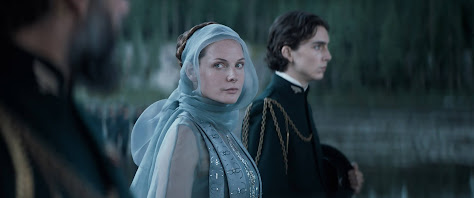
Rebecca Ferguson is a force as Lady Jessica, as she should be; everything always bubbling just under her surface, always strong; always on the edge of breaking down. She walks a beautiful line. From the outset she was my favorite casting decision and that holds. Her elegant but worn looks are perfect for the part. She's captivating. Oscar Isaac works in a role that's probably difficult to correctly balance. Stellan Skarsgård's ominously droll voice and face pairs with the intimidating character design of the villain to great effect. Jason Momoa is a surprise standout for me, his charismatic energy a welcome highlight against his subdued surroundings. Josh Brolin biding his time in my favorite book character; Javier Bardem is in full character acting mode; Zendaya has the right amount of grounded girlishness. Characters I confused with others in the book have clear personalities and outstanding looks to help differentiate. The cast is near-perfect.

The only cast member who doesn't fit into the subtle but refined vibe is Dave Bautista, whose character can be summed up as "angry" and who passively yells his lines to convey that single dimension. This is a small negative, though there aren't many more that could be called bigger. Mostly, I wished for more, though I realize that's an unreasonable ask considering the film is two and a half hours long. I wish they could have included the whole of the first book without cutting out anything or increasing the epic, steady pace (which felt to me like watching a massive river or flood flowing from a high distance—beautiful and serene even with the obvious turmoil and force on display). I think Villeneuve chose the lesser of the evils and I hope it pays off.

The scale conveyed is so enormous it's a little hard to grasp.

This is my personal favorite work from Villeneuve, though I have never considered myself a huge fan. Part of me knows his penchant for enormous scale, robust scifi worldbuilding, and calculated way of storytelling makes him ideal for trying such a difficult piece of adapting. At the same time, I've never been deeply moved by his work. And the same is true here. Seeing the scale of the world, and seeing the book transposed so cleanly to the screen, made me smile, but it didn't bring me to love the story or characters any more. The book didn't bring much emotional attachment either, so maybe it's simply not that kind of story. But a small part of me wonders if the neatness of the work, and the cool, stoic style, are holding me back from tipping from this pleased admiration into something more freely adoring.

How much more astounding would this movie be if it could be everything it is, plus be wild, visceral, and psychedelic? Still, I don't want to complain. Dune had me smiling, enraptured, and dreading it ending—which it did far too soon. It was clearly thoughtfully adapted, keeping everything from the book it could while expanding it in some details, such as the vibrating, liquefying sand under the sandworms' attacks. I loved that. I loved the way The Voice is portrayed, as well as the way the book's heavy inner dialogue is adapted without the characters having literal inner dialogues. The plot was clear. The characters were given room to breathe and grow and the actors given opportunities to break out of the stoicism to have a bit of fun or bring extra intensity. And the special effects are so good I can't differentiate in-camera effects from CGI.

I don't care about fight or action scenes but there were several good ones of those, too.

I have a growing list of favorite scenes, moments, and little details, and have as much a desire to see this again (which I will, probably before I post this) as I do to see what the sequels have to hold. Dune is expansive, grand, and epic filmmaking on an unreal scale. An alien behemoth that can be approached from many angles, but my recommendation is simply that you let it sweep you along in its vast currents of sand to see the mesmerizing world it proudly and boldly puts on display for our appreciation. At the very, very least, it's an impressive and skillful craft of filmmaking.

Monday, October 11, 2021

Free Guy

Spoiler-free!

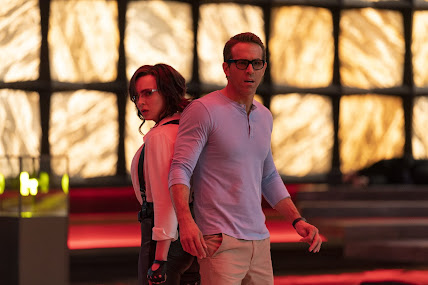
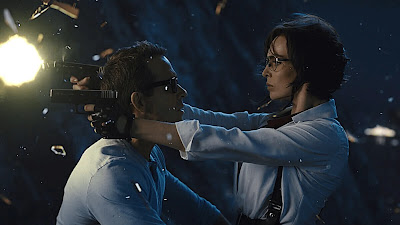
What do you get when you remake The Truman Show but update it for modern day by adding elements of Ready Player One, and a bit of the Groundhog Day concept, and make Ryan Reynolds the lead?

You get a summer movie that actually feels like a summer movie.

Here's a shocker: this movie isn't two hours of Reynolds running around in a videogame world making quippy jokes. There's like, a story. And stakes. Remember those? There are characters who have goals, and an antagonist who's in their way. And they're the good guys because their goals are moral, and the antagonist is the bad guy because his goals are immoral, and the story is written so that we'll root for the good guys and have a satisfying sense of resolution if they succeed.

"No duh, Sarah, that's how movies work." Yep. It's weird. I wish I could say I wasn't starstruck by a mere coherent plotline, but here we are. And I know it's not only me. "It's deeper than I expected" is a popular comment on this film. Why? Because it has real-world characters too, with visible character arcs? Because there's an NPC in a videogame who gains self-awareness and freewill and that makes us consider what human value he has? Not exactly mind-blowing stuff here. And yet, it is. Because movies have been without basic things like moral standards, thought, or storytelling coherence for so long that we forgot how essential they are. There's a romantic subplot that's resolved for more reason than "the movie is ending now," and it felt earth-shatteringly original. 

Shawn Levy understands how to assemble a competent film. "Earth-shattering," he is not. Something else is up here.

While I appreciate that this movie returns to a certain filmmaking standard, that's not to say that it's automatically great. The spell only lasted during the runtime, and now I'm left to mull over how exceptionally sad it is that so little could feel like so much. Because sure, the movie feeds us what I've been craving, but in bites, not meal-sized portions. To say Free Guy puts in more effort than recent action-comedy flicks isn't saying anything, really. They have funny guy Ryan Reynolds at their disposal, and they let him do his thing. But too much so. More often it's more like they leave him—to ad-lib quips on top of normal scenes, instead of writing set-up and pay-off jokes for him to elevate. Most of the comedic scenes are not only unnecessary but totally humorless. (Hello Channing Tatum.)

They let Taika Waititi have fun too, and I liked hating the character. But did they think we wouldn't notice he was the bad guy unless they had him spell it out for us? "I love money, I want more money, I don't care about anything but money." We get it. A little subtlety wouldn't kill you, and would ring truer, even for an over-the-top character. And of course, they can't help but wedge in some political talking points, some that clash with the actual intent of the movie. I'd have cut 10-20 minutes from the runtime, mostly in cameos and people watching events from the real world. That got in the way. There are also three separate sequences that feel like the "final battle." One was expensive, one "funny," and one had narrative relevance. Guess which one I'd keep?

Even in action movies the last thing I care about is the action...

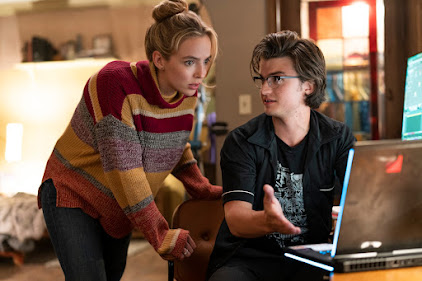
My favorite aspect was the real-people characters played by Jodie Comer and Joe Keery. They own the heart of the film, baby-sized as it is. Keery's relevance to the plot was especially a nice surprise. I was fully expecting him to be a side character meant for more jokes only. In fact, I wish there had been more real-life all around. Comer's character is even more essential on paper but doesn't feel it because we see her mostly in the game, where she lacks her real-world personality. We thought that Reynolds' star-power, the humor, and high concept actiony videogame fun was the point, but it's not, not really. It's dressing. Free Guy remembers that better than most, but not quite well enough.

Sunday, September 26, 2021

A Quiet Place Part II

Some spoilers, for this and A Quiet Place.

If you call it a "Part 2" it's easier to make people swallow that it's not just another unnecessary sequel. Heck, even I got drawn in, and I despise the idea of sequels as a rule. What got me interested though, was adding Cillian Murphy to the cast to fill the hole John Krasinski's character leaves. Krasinski is still directing though, and this time he's also writing the whole thing. For the first movie he bought and tweaked an original script, and now he's trying his hand at expanding the story alone.

It's debatable whether the story wants expanding in the first place, let alone if the continuation settled on is any good.

We pick up exactly where we left off (after a flashback prologue). Emily Blunt and children leave their farmhouse to find one of their neighbors whose fire they would see from their water tower. This is Emmett (Cillian Murphy), but he's not as interested in playing father figure and man-of-the-house as the Abbott family wishes. He's already lost his family and is now a Joel from The Last of Us, lone wolf type character. However, Regan (Millicent Simmonds) has her hearing aid device that incapacitates the aliens and when she finds a radio station that is still broadcasting, she's determined to use it to help other survivors fight back. When she leaves alone, Emmett finds himself going after her, and then along with her, despite his protests.

The story splits then into two plotlines. The one with Regan and Emmett is interesting; straightforward in its goal, with ample opportunities for exploration. The one with Evelyn (Emily Blunt), Marcus (Noah Jupe) and the baby, however, is small potatoes, with no goal at all other than to survive when the aliens inevitably find them (after a year and a half they're still terrible at living quietly.) It tries to give Marcus an opportunity to become a man, but must make him even more of a frightened useless child first to make the change clear. It smacks of fishing for story filler rather than letting the story push along at a natural pace. Because both plotlines were focused on equally despite unequal value, neither was developed fully.

Abandoning Emily Blunt's plotline altogether would've been a crazy, bold, and I think rewarding, move.

The Emmett-Regan plotline could have been a movie all in itself, but it had corners cut to make room for the pointless other plotline. Everything happens too fast for them, and comes too easily. The two have a lot of potential together, and I liked their chemistry, but they slip too quickly into a father-daughter dynamic, especially after Regan's rough relationship with Lee, turned to deep loyalty. She initially rejects even the idea of Emmett becoming even a temporary protector. Then warms to him after one incident. They also have a language barrier, in that he cannot sign. This is got over easily and is never an issue in high-stakes situations. Then an evil tribe of cannibals is set up as a non-alien threat, but only amounts to one scene once they show up. 

It's rush, rush, rush, and then it's over and I can list on one hand the important things that were accomplished. I don't even need all five fingers! If it needed to end at that point to allow Part III all the plot it needs to wrap things up, then why not let this story sit back more and develop relationships? Why not explore the themes of family further, instead of leaving themes out altogether? Did Krasinski not realize those were the things that made the first one good? Or is he simply incapable of creating on that level? He is a good director, but he needs a good script with clear purpose, else his movies lack direction, and those satisfying moments of resolution that made A Quiet Place stand out.

"More of the same," but only superficially, isn't really more of the same, is it?

I feel like A Quiet Place Part II's only purpose was to set up the pieces for A Quiet Place Part III, so I guess I'll hang on and see how the payoff goes. Despite the definite downgrade in writing, this movie maintains its winning premise, with the same intense alien thriller feel to it, and tentatively expands the lore on its featured creatures. The mortal flaw is simply that it's lazier; messy next to the lovingly crafted original. Even with nothing to do Emily Blunt is good. Millicent Simmonds steps up her game to great results, and Cillian Murphy is a vital addition that makes the whole endeavor better than it has a right to be. If nothing else, I'll watch Part III to see more of him.