Pages

Wednesday, February 20, 2019

Alita: Battle Angel

Spoiler-free!

Alita, the girl, is a cyborg -- a sophisticated robot with a human brain, made 300 years before she is found in a garbage heap by Dr. Ido (Christoph Waltz) and reconstructed. She is a relic of a time past when things were made with care. And so is her movie.

They just don't make 'em like they used to anymore.

Alita is directed by Robert Rodriguez and written by James Cameron and Laeta Kalogridis. It's based on a manga, so this cyberpunk scifi adventure (I can't even type those words without smiling) starts out with established and already well-loved characters ready for adaptation. I can't speak as to accuracy, but I get a strong impression that it was done with buckets full of TLC, based on the results. There are beautifully minute details, expert pacing, clever turns and subtle foreshadowing, and I didn't except almost anything it does. And it retains a distinct Japanese feel, from the world, to plot points, to tone, and right down to characterization; the heart and soul of the story.

The greatest of its characters is its protagonist, played through motion-capture by Rosa Salazar. I only knew her from The Maze Runner series where she was fine, though those movies are certainly not for showing off acting chops. And after watching the Alita trailer I had doubts over believability, characterization, and the design that made her eyes so big. Then the movie proved all those doubts unfounded one by one. At times I tried to imagine the mo-cap pajamas, but the standard was that my brain believed what it saw, and I had to try and twist it to see it as fake. Especially when live-action characters touch her casually and you can see the weight and existence of her. Motion-capture has always been fascinating to me, and it continues to make impressive advancements.

You can see Salazar in her effortlessly. And she is charm itself. 

But even then, characterization is where I was most wowed. I wish I was thirteen again, or that I could send this movie back in time to thirteen-year-old me, because she would have fallen hard for this movie, and the girl who powers it. Alita is naive, charming, tenacious, confident, totally unflappable, and as weird a moment as it was, my favorite part of her became clear when she declared that she gives all or nothing. She loves people with everything she has, or she fights them, and there's no in between. And she makes wise decisions over who falls in which category. She has faults and obstacles to overcome, and a spectacular origin story arc to do it in.

I was entranced by the balance of her; her sweet smiles and open heart (sometimes literally) countered by her ferocious and ruthless power, and her unwavering decisiveness. Thirteen-year-old me could've used a decisive fictional role-model. And after all that, the eyes that I raised an eyebrow at in the trailer... well they became as essential part of her. And with that realization I began to understand the care that must have gone into this film. She and her film weren't just haphazardly chopped together, but whoever made the decision to include her appearance so accurately must have known her well enough to understand how vital it was. It wasn't some lame excuse to use more mo-cap; it was the backbone of the whole story.

There's life behind those animated eyes. And that's the magic of motion-capture; it's made to capture motion, and somehow captures the soul too. 

The characters that surround Alita are there to support her, and it's within that role that they feel full and engaging. I've never liked a Christoph Waltz character more (though I do usually see him play bad guys) and I was eternally impressed by the love interest not being there only to be a love interest. Often the fate of female love interests but now feminism has only flip-flopped the problem; but this is a rare case. Hugo (Keean Johnson) doesn't cease to exist when he's not by Alita's side, is important to the plot beyond being a thing to fall in love with, has character, and to my gleeful surprise, even has good chemistry with her. Their side of the story is cheesy, sweet, compelling, and even has real stakes.

Alita's relationship with Dr. Ido is also compelling, has some neat twists to it, and some real-feeling moments of conflict. Rebellious teenager and everything. Those three make up the center of the movie. On the outside is people like Mahershala Ali and Jennifer Connelly, who you could say were underused, but they work within their confides and do a good job. There's also Jorge Lendeborg Jr. who was totally normal (why oh why couldn't he have been like that in Bumblebee??) and Lana Candor who I think should pop up in more random movies. Ed Skrein made an extremely fun and uber cool villain, and Jackie Earle Haley was the big physical villain for fighting. Oh, an Eliza González of Baby Driver was there for a hot second too.

I honestly expected the romance to be an eye-roller. And it kinda was. But I fell for it anyway. It was a good eye-roller.

Even the naysaying grumpy old bores who don't like this film readily admit that it's an impressive feat concerning visuals and action sequences. I honestly expected there to be full-blown battles in this somehow, but wound up loving how static and small-scale it was. The biggest action was this hardcore sport called Motorball, that's like a roller derby mixed with basketball on a NASCAR track from hell. It's exactly as awesome as it sounds, and reminded me a bit of Speed Racer. The combat fights were typically one-on-one which is exactly my speed. They were small, and get personal fast. And brutal even faster. The PG-13-level violence shocked me every time, and the movie makes serious choices that it can't take back. And it makes them boldly.

It did things that I didn't want it to do and made me deal with it, and with that earned my full respect. I have a few complaints that boil down to personal taste rather than anything actually flawed, but can be summed up in that I wanted more. It seemed like Alita herself soaked up a lot of the budget, and while I am glad of the more intimate plot, the scale could've gone bigger visually for my money. The look of it was neat and certainly cyberpunk, but a clearer style and cleaner, more striking cinematography could've turned this compelling story populated by lovable character into an absolute trifecta of science fiction. Still, if budget was what prevented that, they made the cuts in the right place.

I love high aesthetic in my scifi, but character and story should and do come first. Anyway, there's slow-mo shots like this so who's to complain? 

I also want more in that I hope a sequel gets made. I'm tired of movies that only exist to sequel-bait, but I'll readily defend this, as that's not at all the case here. This movie was an origin story, and couldn't have existed without this first chapter. Though it leaves us with the impression that bigger things are to come, it stands on its own with a whole, completed plot; builds itself up carefully through emotional journeys, and developing characters and relationships; and doesn't leave anything unexplored in order to tease.

A beautifully versatile movie, it perfectly mirrors Alita's personality, hitting beats of silly camp, then melodrama; one second it's sweet and cute, and the next unexpectedly, disturbingly dark. It takes itself seriously, but is fun and unafraid to play around. Like its amazing and unique heroine, it's made with care of craftsmanship; and like its heroine, it works hard to discover what exactly it is, and then it is that, exactly, with undeterrable passion, and a heart that will never fail.

Monday, February 11, 2019

Dark

Spoiler-free!

When Jonas Kahnwald returns to school in the quiet town of Widen, Germany on November the 4th, 2019, all his schoolmates think he spent the last two months in France, but that isn't true. Really, he spent the time in a psychiatric hospital trying to recover from the trauma of his father hanging himself in the attic that August. All he missed was a local boy, Erik, going missing -- oh, and his best friend Bartosz is now dating the girl he likes, Martha. Things don't seem to be looking up, but at least they know where Erik kept his drug stash -- out by Widen Caves. A group of them go out there after dark, and some strange sounds and a wild sprint back to safety later, another of their number is missing. This time, Martha's younger brother Mikkel.

A German-language Netflix show, directed by Baran bo Odar, co-created with Jantje Friese.

What follows for the next nine episodes is a breathtaking downward spiral of ever-increasing complexity and interweaving madness that will leave your head spinning. There are so many elements going on in this show that I can't possibly hope to cover all of them. I'll stay away from plot for no spoilers, and unfortunately can't talk much about the characters either for the same reason -- plus there are just plain too many of them. Nearly 20 could easily count as main characters, and they all have their motivations, secrets, and conflicts with each other. At the center is always Jonas (Louis Hofmann), but even he doesn't appear in two of the ten episodes, so wide is this show's scope. Ulrich Nielsen (Oliver Masucci), Mikkel's father and a detective looking for the missing kids, is the only person in all ten.

So, it's down to quality, technique, tone, and vibe then -- and I could talk about the latter two all day, but let's start at the top. I'm not sure how big a production this was in Germany, but it was either impressively big or incredibly efficient with what it had, because it comes across as massive. It opts for practical effects over digital whenever possible, and invests strongly in what it has. The casting director (Simone Bär) deserves a medal; you rarely see such obvious care put into the amassing of a cast, let alone one this big and this capable. And the score caught my notice by being so strange and mood-setting with odd percussion sounds, and weird airy hoots and screeches. Then the soundtrack is occasionally obscure and always to die for.

Some German, some English, some 80's classics, and some strange to amazing modern stuff.

Writing is clearly exceptional. I am amazed at how masterfully this complex plot was doled out for a steady build of wonderment. Every reveal has maximum impact. And I have to say I loved hearing the German language spoken by normal people. More often I hear it in WWII pics where it's made to sound as harsh as possible, but here it's so laid back and beautiful. Rich, with an edge, just like the show itself. Though I'm sure at least a little is lost in translation, the lines are smart but not showy, and nicely cryptic, forgoing blatant exposition, so many connections in the plot are made in reverse, which is a remarkably satisfying thing to accomplish.

The scifi elements are presented with such realism, and the character's reactions to them are the perfect level of confusion and acceptance that things never come too easily, but no one's annoyingly obtuse in understanding either. Objectively the show is paced slowly, but as you watch it, it feels relentless, like if you don't keep up, you'll be left behind. No serving things up on a platter here; we must dive in with the characters to discover and piece things together. Nicely, the show does give us the required information to solve a mystery before the character does, and this slow accumulation of clues helps. The first time I watched it, I was on the verge of being lost the whole time, and the mental challenge it presented was thrilling.

Even just keeping track of who is in who's family was a fun challenge!

One of my favorite things this show does is probably at least partially meant to provide a break from the mental strain, and it is that in the 3/4 mark of every episode (or nearly every) the plot will pause, and the soundtrack will gear up to a thousand and play a moody piece of licensed music while the show casually checks in on its characters -- usually not doing anything particular except being moody. The show does have consistent style throughout, but it's these moments that really leave an impact as to how incredibly beautiful this show gets. It lays it on thick, and without an ounce irony; and it's mesmerizing. This show doesn't hold back, doesn't apologize, and doesn't need to. It's fascinating, and richly decadent.

My other favorite thing is how well the characters are handled. We get to know them all deeply, and whether our knowledge leads to love or hate for them, it's always done with subtlety -- with sympathy for the bad ones and flaws for the good. I found it wonderfully satisfying to harbor hate for one particular character, but it doesn't lack in villains. And I naturally invested with Jonas' story most, but there's no lack of lovable, sympathetic, and fascinating characters either. Character arcs are a strange thing, and often are completed out of order, so that the journey is only perfectly clear in retrospect. Theme is remarkable, and remarkably well done: I almost wish I could explain, but even with spoilers I'm not sure I could do it justice. It seems to go deeper than I could find the words or the time to describe. Suffice to say, it left an impact.

"What we know is a drop; what we don't, an ocean."

Dark is streaming on Netflix. I recommend it as a science fiction mystery and drama; bleak, but determined to entertain with every moment. Comparable to Stranger Things, but with less pop-culture and comedy, and for more mature audiences. Its relaxed pace and dark tone won't be for everyone, nor its complex puzzle of characters and rare mature content; but another season is on its way, so now's the time to catch up if it at all appeals to your sensibilities. For me, I'm excited to see where these characters will lead us next -- with new interweaving mysteries, a fresh bounty of mind-blowing twists, that sweet, sweet mood-setting soundtrack, and patent German style -- eager to discover what the future holds for this magnificent treasure of a show.

Wednesday, February 6, 2019

Velvet Buzzsaw

Spoilers are marked.

This movie is literally a critique of critics who are too pretentious to approve of anything released by Netflix, simply because of the casual, readily-available nature of Netflix automatically denotes them as low art, whether they're well-made or not. And the irony is, this movie is getting exactly the kind of criticism it condemns.

Written and directed by Dan Gilroy.

It's about the art world -- much like film art world -- run by the rich and influenced by the pretentious. Morf Vandewalt (Jake Gyllanhaal) is a critic and one such influencer. His reviews can make or destroy. He makes pretentiousness his signature style. Rhodora Haze (Rene Russo) runs an art gallery. Josephina (Zawe Ashton) is her assistant. Jon Dondon (Tom Sturridge) runs another gallery. and Gretchen (Toni Collette) represents collectors who lend their pieces to the galleries. Piers (John Malkovich) and Damrish (Daveed Diggs) are artists. Coco (Natalia Dyer) is a low-level assistant/receptionist, and Bryson (Billy Magnussen) is a technical repair guy.

One day, Josephina goes home to find her neighbor has died suddenly, and that his possessions are to be destroyed per his request. She happens to get a look inside his apartment and find that he was an artist -- and that his eerie work is exceptional. She takes it and hatches a plan with Rhodora to claim ownership and sell and show the work. Morf loves it. Everyone loves it. But the art is possessed with something. It moves; it burns itself; it infects other art and kills, Final Destination-style. It is, perhaps, possessed by the restless spirit of its creator, who wished it to be destroyed, not fawned over and sold for exorbitant prices by people who only care for it as a new, marketable commodity.

Just a couple artists appreciating some art...

On surface-level it is a fairly standard horror flick. Characters do bad things, and die in some kind of harsh justice or retribution exacted by the supernatural entity. Their interactions are mostly to establish what cold, backstabbing thing they're doing. Twists come along in their due time, and there is the natural, expected ebb and flow of drama and mystery. Pacing is exact; cinematography purposeful but not overly-showy or experimental -- it gives moments of simple subtle beauty. Death scenes are practically announced as they open, and then are played out in interesting but not particularly disturbing or overly-gory ways. The overlay of comedy these scenes take diffuses the horror too.

But then, dialogue is brilliantly hilarious, as everyone speaks in an artsy, highbrow way, so much so that I had to become accustomed to the way they spoke in order to understand what they were saying. Fortunately, the opening sequence is used to introduce characters and establish this hyper-language, so that once exposition is given through it, we've hopefully gained an ear for it, and don't get lost in extravagant articulations. This then flows into line delivery, which is every bit as brilliant, especially coming from Gyllanhaal, who continually made me laugh with his exact timing and detailed mannerisms. Meticulous, but relaxed. And Collette was almost equally good with far less time to work with.

"Kisses!"

Not everyone can be such extremes, but they were all excellent bits of casting, from the simple look that screams "douche" the moment you lay eyes on Jon Dondon (even the name is all you need!), to the subtle blank soullessness of Josephina. And they all have such unexpected moments of hilarity when they embody these caricatures of art world inhabitants. On this surface level, the film is odd, yet plays by the rules. The poking fun at stereotypes and absurdity of modern art has a dark humor flavor; yet the plot plays out by the numbers. You could almost say it doesn't take risks. But its point wasn't to be a risk-taking plot, or to break new ground within the horror tropes it uses, but to make a commentary using the medium, if you will.

See, this movie is very competent, and does exactly what it wanted to do, then it released through Netflix. I've long held the opinion that some critics tend to frown on any Netflix film simply because of its nature, and in the film Rhodora comments that they don't sell eternally viable commodities, but a mere perception. Netflix is a taboo that decreases the value of the art is distributes. In the film, they lie about how many pieces exist because the price rises if there are less. Netflix distributes to all; exclusivity increases value. And the film punishes characters who value the art only by what it's worth instead of what it means to them -- as art.

It deliberately sacrifices creativity to become the thing it is defending. It practically invites shallow criticism. It's kind of brilliant. 

At the end of the film -- mild spoiler here -- these paintings that had been fought and fawned over are being sold on the street for $5 a pop. But the fact remains: if it was good art before, it still is then. A lady and her man come by, are impressed by one, and very willingly fork over the few bucks for it; and you get the impression that they will suffer nothing for having it hang in their house, to appreciate as they walk by, day by day. Because that's what art is for.

As a horror flick, or even as a satire of the art world, this movie can't reach the standard expected of it. It perfectly well made, paced, filmed, and acted; but lacks that new, fresh quality that might denote it as Worthy Art. As a commentary on critical prejudices and defense of film as artful entertainment rather than something to own, boast of, and give prestigious awards to, it transcends itself. No, it's not Worthy Art -- for that is exactly what it despises.

Friday, February 1, 2019

Upcoming Movie Roundup - February

First month of 2019: done. I saw: Escape Room (review) and it was good! As I hoped, fun, involving, neat characters. Nothing groundbreaking but I had a fantastic time with it. And Io (review), which was a Netflix release, and that's the only reason I watched it, and it wasn't a total waste of time, but you know, I watch too much scifi anyway.

I didn't get to Glass because I never found a reasonable way to watch Split, so I guess I'm waiting on both of them. And I still do want to see the Kid Who Would Be King, but it seems only borderline worth a theater trip so I dunno.

Here's what looks good to me this month. Nothing I'm extremely excited for, but we'll see how it goes! Hope y'all's 2019 is off to a great start!


Velvet Buzzsaw
Feb 1st(netflix); R
I'm not sure I'm ready for another horror movie that has Toni Collette in it. Even if it is also a dark comedy and I definitely like those. I expect I'll get around to this one soon enough... but... not today. The cast is a big part of the appeal -- Toni, plus Jake Gyllanhaal, John Malkovich, Natalia Dyer of Stranger Things, Billy Magnussen... and the trailer at least has great style. Plus I'm always down for a movie that pokes fun at modern art.


The Lego Movie 2: The Second Part
Feb 8th; PG
No way I'm not seeing this, but I'd be shocked beyond belief if it has the same huge heart of the first one. It probably won't even be as original or as funny, but it can be comparatively lacking and still be an awesome movie, because the original left a ton of room below it! Whether they're great standalone films or just a fun Lego time, I'm glad to participate. The best part is probably going to be Chris Pratt also playing an amalgamation character of Star-Lord, Owen, and... Indiana Jones for some reason? That, or Lego Batman, cause he's the greatest.


The Man Who Killed Hitler and Then The Bigfoot
Feb 8th; NR
This is so strange yet it really looks like a genuinely good movie. Almost like it's ridiculous camp, but played ultra cool and seriously. Like a hardcore version of Big Fish. I dunno, I mostly want to see it just to see how it works! Sam Elliott and Aidan Turner play the man, and Ron Livingston is also there.


Cold Pursuit
Feb 8th(limited); R
Look I'm sure this movie will be fine -- in fact I'd bet it's going to be a ton better than most of what Liam Neeson has been putting out recently, but I would like to take this opportunity to do a PSA: That this movie is based on a Norwegian film called In Order of Disappearance, and it stars Stellan Skarsgård, and it's available for streaming on Netflix... and it was pretty darn good. But this'll probably be worth watching too. It's got good visual style and is keeping the dark comedy tone which is, ah, cool.


Happy Death Day 2U
Feb 13th; PG-13
Haha, well I haven't seen the first one yet, but now that they've made a sequel, and given it THAT title, I think I'm gonna have to watch both at some point. Looks like a fun time anyway. And it's got Josh from To All the Boys I've Loved Before in it! Was he in the first one too? I guess he had to be.


Isn't it Romantic
Feb 13th; PG-13
Rebel Wilson, who I pretty often find funny is a girl who hates rom-coms, hits her head (classic) and wakes up in a rom-com. This is the perfect movie for the rebirth of the rom-com we're witnessing right now. What I'd love to happen is for it to play out like a classic rom-com right through the end. She ends up with Adam Devine instead of Liam Hemsworth of course, but doesn't see it coming because she hates rom-coms so she doesn't understand the tropes well enough. So it's meta and can make fun of rom-com silliness, but ultimately embraces the light, sweet romance aspect that makes rom-coms great. If it does that, I'm there. I'm kinda there already anyway.


Alita: Battle Angel
Feb 14th; PG-13
I don't want to pass this one by just because the girl's face looks weird -- though it is very distracting in the trailer and inexpressive -- because I really, really, like scifi worlds like this one appears to have, and the whole movie kinda feels like a throwback to the best scifi actioners the early 2000's had, and I don't know, but it's all kind of appealing to me. Rosa Salazar leads, with Christoph Waltz, Jennifer Connelly, and Mahershala Ali. Kinda an old-school style cast too.


Mega Time Squad
Feb 15th(limited); NR
New Zealand sure does put out a special brand of comedy. It's like they relish how incredibly dorky they can be, and it makes everything cool for some unexplainable reason. In this one a guy is cursed with a time travel device, accidentally meets himself, and then keeps meeting himself until there's a whole bunch of them... and then they team up to fight the bad guys or whatever. I'm in. (Language warning for this trailer.)


How to Train Your Dragon: The Hidden World
Feb 22nd; PG
Love the first one, second one's okay; this one's getting just as good reviews than the second so maybe it'll end satisfyingly. I'm kinda tired of watching the trailer which isn't a good sign, but the animation is as beautiful as ever, and if they story is good I'll be happy. I don't think anything could match the first one -- and it seems like they agree with me, since they put that bit from the first one in the beginning of the trailer.


Thursday, January 31, 2019

Io

Spoiler-free.

Surprise, surprise, Netflix has put out yet another low-key, small-cast, post-apocalyptic movie, that preaches about how we should take care of our planet. There was a time when the combined words of "low-key, small-cast, post-apocalypse" would send my sci-fi and deep character-loving side a thrill of excitement. Now it mostly just means a cheap way to get out a tired and impersonal message.

This one smacks interestingly of The Martian Knockoff, except in reverse. There's a scrappy scientist girl named Sam (Margaret Qualley) living in the ruins of Earth where the atmosphere is now toxic. Except on the top of her mountain home where the air is clean, she must always use an oxygen mask. She's alone -- more or less stranded while the rest of the earth has left and is living on a space station in orbit of Io, one of Jupiter's moons. They're looking for a planet to colonize, and her boyfriend writes her to join them. But she's too busy doing scientific experiments on bugs.

She looked so much like Rebecca Hall to me I was 100% sure she was her daughter or sister. Turns out she's actually Andie MacDowell's daughter. 

It feels like Martian lite. At one point she even has a bad storm blow through that destroys much of her hard work. She does science, but it's hardly explained and mostly fictional instead of science-y. She encounters a lot of problems to solve, but they're mostly introduced only so the audience can sweat for about two full seconds before she casually reveals that there's an easy way out after all. But they eke away from The Martian when Micah (Anthony Mackie) shows up. At first, I thought this would be a good thing. She wasn't bad alone, but Mackie's a reliable actor, right?

Well, I dunno, but he made it worse. At least before, it was interesting in that the only dialogue was her log updates or her voice-over reading letters to and from her space-boyfriend. The moment she spoke to Micah it seemed wrong, and from there a giant stall commenced, as everything had to be explained that was implied at the beginning. Their time hanging out lasts far too long before the final act begins and they have chemistry -- but in reverse. Like, every time they were in frame together I could practically see the magnetic fields that repelled them. Few weirder or more uncomfortable things have I seen on film.

So, so awkward.

Their time together is spent in revealing things about Sam that I'd already guessed and things about Micah that made him worryingly dislikable. Finally, The Martian template kicks in for one last dying breath as they need to travel a great distance in order to get on the last shuttle off Earth. But like the rest of this movie's obstacles, that one also goes nowhere fast. Eventually it settles into it's theme and moral -- that it's about one person trying to save the Earth. Reverse of The Martian again, which was about the whole Earth pulling together to save one person.

And that's where it just plain falls apart. I love a story that's about helping one person because there's intimacy juxtaposed with the grandeur that the life of one person is valuable enough to move the whole world; but one person slaving away to save something that has no soul -- as beautiful and valuable as it may be -- leaves me shrugging. I simply don't care. Perhaps if the film focused more on why she wanted the Earth to survive and made it more character-driven, but her desire seemed to be fueled by nothing, and then by a grasping connection to Greek mythology.

The scifi was SO low-key that they REALLY needed depth of character to make it work. And... they did try.

So besides the lack of an intimate character-study of fascinating and lovable characters, and being too low-key to include much science or science fiction, the movie does have a pleasantly relaxed tone throughout, and never dives into any of its aspects deeply enough to find anything to irritate me. Rather, it exists on a simple and elementary level to wax poetic in borrowed lines from the talented and knowledgeable, and to preach timidly on a subject none of us are strangers to. It is restricted by it's budget and knows it, but still can't find solid footing to work in on the small scale.

So, as far as low-key, small-cast, post-apocalyptic science fiction is concerned, you'd be far better of watching Sunshine, or The Road, or Young Ones; or even Z for Zachariah, but only in a pinch. None of those are on Netflix, you say? There's still last year's How it Ends to consider, with far better character work and eerie apocalyptic imagery. Io may be calm and unoffensive, but only because it's too meek and simplified to have anything of substance to say.

Monday, January 28, 2019

First Man

Spoiler-free!

With his third film, the undeniably talented filmmaker Damien Chazelle tackles the story of the first man to walk on the moon, and in the effort to bring his story down to earth, turns him and the NASA Apollo team -- the biggest, baddest, most brilliant rock stars of geekdom -- into "a bunch of boys making models out of balsa wood."

Oh dear. Here we go... It's like half the movie wanted to be in awe of them, and the other half wanted to tear them down and "show them for what they really were." The direction and the writing felt at odds.

My biggest issue is with the treatment of Neil himself. I know next to nothing about him, so I'll try not to speculate too far, but it seems to be that Chazelle's (but perhaps more the writer, Josh Singer's) intention was to humanize his story. To that end the film begins with the death of his young daughter, and Neil spends the next eight years of his life in what is presented as a constant state of depression. His goal of reaching the moon seems dangerously obsessive, yet oddly joyless, and his ultimate success more the result of mere luck than the kind of hard work, training, and discipline it certainly took in reality.

Part of this has to be attributed to Ryan Gosling's deadpan performance, which I'm sure was intended, but ultimately comes across as cold. There are subtleties there, but mostly I found that the filming style created performance out of little substance. Those eye close ups -- they convey an idea of what lies underneath an emotionless stare. However, the character is written to have so much instability that I would worry about NASA's vetting process if I were convinced his characterization were accurate. It's unfathomable to me that having already lost a child, and fully prepared to risk his life, he wouldn't value the chance to say goodbye to his children, no matter how confident he may be of his return.

This is going to sound meaner than I mean it to mean, but I felt equal connection to him when he was standing with his sun-shield up as I did when he was actively emoting. i.e., the film conveyed emotion FOR him, not THROUGH him.

It smacks of sensationalism -- and why not? There's a reason this story hasn't been told before. As magnificent and history-making an event it was, it was simply too by-the-numbers successful endeavor to make a compelling film. So an effort is made to make it seem as dangerous and duct-taped together as possible; even to the point of presenting factual errors and stretching the truth for drama. For his part, Chazelle literally shakes the audience, and goes deep into the visceral experience. Shot on film, grainy, handheld camerawork, high-contrast and glaring lighting; it's nothing if not dramatic. And to its credit this style makes the open and still photography of the moon's surface all the more striking later.

That sequence was by far the most grabbing of the film -- and it was all due to the contrast of filming style. Yet Neil's character has no such moment of contrast. With juxtaposition of highs, his lows may have been more deeply empathized with, yet he's consistently despondent and frustratingly aloof, to the point of returning to the very thing this film ran from: that the man was unrelatable; but it a way that paints him badly -- as immature and anti-social -- instead of the positive if unattainable status he's more deserving of, as an absolute legend of history.

Claire Foy is great because Claire Foy is always great. There has never been a time when she has been less great than she was at every moment in this movie. However, I didn't care for the role her character took in the story.

I know there has to be some who would disagree with me and identified with this character. It is a character piece, and is put on with subtlety and rawness classic to indie sensibilities. It lost me as a character study, however, and the loss was felt because there was no backup to keep me on the hook. As a science-fact space-exploration film, it hardly even tries. I had no expectation to start, but found myself again and again wishing for the audience-friendly science explanations and easy structure of Ron Howard's Apollo 13. That film is the perfect storm of understandable science, balanced characters full of emotional range, and true-story credibility.

It seems almost unfair to compare the two, but therein is exactly my point. First Man intentionally sets aside in-depth explanation of technical aspects to drill deep into the character of one man; and with that singular goal, still fails to capture my affection for that one character the same way Apollo 13 did for at least four characters, while spending half it time as an educational video about how to make a CO² filter out of duct tape and a sock. Still, Chazelle didn't set out to make Apollo 13, but his own creation -- and it is beautiful in his way. There were moments worth the frustrations -- mostly in the visuals which were remarkably great. Despite its failure to capture me, I'll certainly retain a level of respect for the work as a whole.

It's beautiful, and there's value and appeal to that. But it's the kind of value that will diminish and be replaced in time. I far prefer Chazelle's work when he writes for himself. Then the heart matches his style and tone.

First Man is undeniably a visceral, and carefully and artfully crafted film. From a fictional perspective it's handled well, feeling both massively epic and massively intimate. From a real-life perspective the efforts and heroism of its characters seems intentionally minimized. And from a personal perspective, that minimization edges on disrespect, the intimacy lacks attraction, and the epic scope conveys little more than a cool, clouded glance into one of the most impressive and awesome feats of mankind.

Saturday, January 26, 2019

The Circle

Major Spoilers.

Is this movie trying to be what it appears to be trying to be -- a movie about a good idea taken too far -- or is it trying to be what it is -- the most disturbing and effective anti-technology, anti-mob-rule, pro-personal freedom horror movie I've ever seen?

It's a tough call, but to say it meant to be as horrifying as I found it would be to give it more credit than I'm willing to attribute...

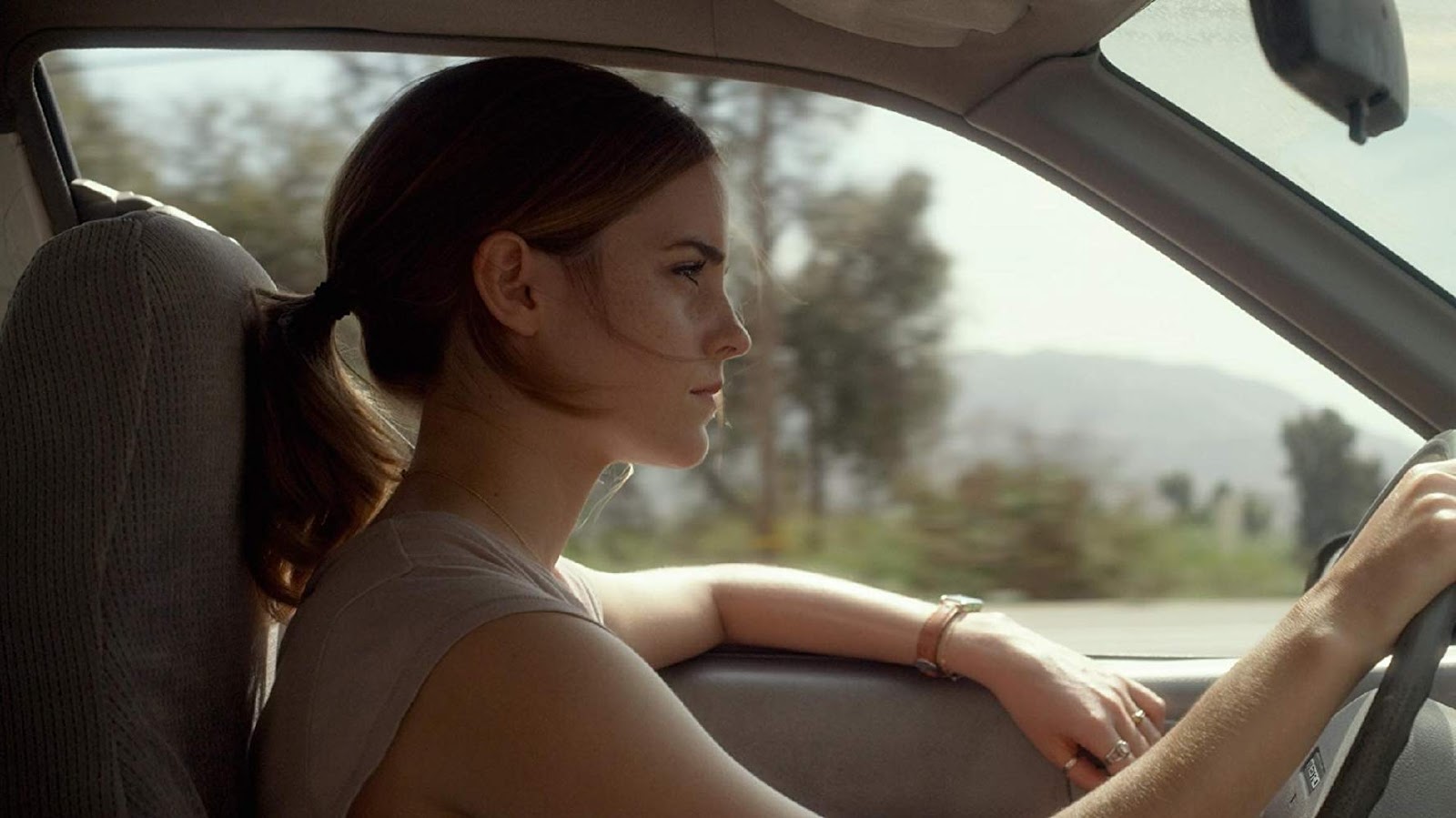
What I expected based on the trailer and critical reception was a technology-cult movie, starring Emma Watson, with Tom Hanks as the seemingly-nice but really rather evil cult leader, and supported by John Boyega and Karen Gillan, that turns into an espionage-esque thriller in the end, a la Eagle Eye or Enemy of the State. Avoid-the-surveillance-to-save-the-world kind of deal. That wasn't it at all.

So here's what really happens: Mae (Watson) starts the film with a friend from her neighborhood, Mercer (Ellar Coltrane) who's notoriously off the grid and opposed to using social media. Mae gets an enviable job at The Circle, which essentially combines all social media and internet-things into one interface. She lives on-campus, and is strongly encouraged (and passive-aggressively peer-pressured) into taking part of the social media interaction with co-workers. It basically part of the job to be socially active in the community.

There was an underlying "off" element to it that was intentional. By the end I had no clue what it meant by it.

In her effort to further her popularity in this community, she shares a photo of a deer-antler chandelier Mercer made for everyone to appreciate. Next thing you know, he comes to her work to complain that he's received a plethora of hate-mail including even death threats from her followers, accusing him of being a deer-murderer. He doesn't kill the deer himself, it's hurting his business, and it's making him much more web-present than he's comfortable with. As they talk and she apologizes (she had no idea that would be the outcome) Circle community members gather around them, filming with their phones and calling him "deer killer" to his face. The scene is unsettling to say the least. But... casually.

Soon after, despite her thinking it all odd, and despite making friends with John Boyega, who it turns out, invented the interface and hates what it's being used for, she slips further and further into the social aspect, until, one day, for no determinable reason (or maybe I just can't remember) she does a thing called "going fully transparent" in which she wears a live-streaming camera on her shirt 24/7. This rockets her up in popularity, alienating her friendship with Annie (Gillan) who got her the job in the first place. She starts going to board meetings and participating in the furthering of the business.

One second she's scoffing at it, the next she's more involved than anyone.

A few ideas later, she's giving a presentation to the community, in which, because of the size that Circle users and her "fully transparent" stream-watchers has grown to, she makes an experiment. Can her millions of followers with their cameras track down a fugitive from justice? She starts a timer and it takes them ten minutes to locate and arrest an escaped convict. Then she asks for a suggestion from the crowd: who else should they find? Mercer, they say. She says no. They start a chant. Tom Hanks intervenes, and "encourages" her to give them what they want. Fine. She starts the timer, and less than ten minutes later, Mercer is dead; following a car chase with phone-wielding busybodies.

After that Mae goes home for a while to reevaluate her life. What was wrong with The Circle that it caused such a tragedy? Four days later she returns, goes full transparent again, and using her smarts and the pressure that her great following endows her with, essentially forces Tom Hanks (And Patton Oswalt? For some reason?) to join her in her full transparency, having already hacked their emails (even the super-duper-ultra-secret ones) and sent them out for the whole Circle community to see. The film ends with her having assumed control over the whole company by power of popularity alone, and revealing plans to force the whole world into participation and transparency.

Because people behave better when they're being watched; because secrets are lies; because withholding information from people is equivalent to stealing from them, and because participation in society is vital. Wow. For a moment, as the upbeat pop music played over the colorful pastel palate of the credits, I was downright angry. Then it occurred to me: perhaps that was the intention. If not for the upbeat credits and my conviction that Emma Watson would have never agreed to play that character if she saw her how I saw her, I might be fully convinced.

There's NOTHING this movie says that I agree with. I can't figure out what was meant sincerely and what wasn't!

So much sits so wrong, not just the part where she caused her friend's death and then doubled down on the promotion and distributing of the tool used to bring about his demise. She outs Hanks by force, and we the audience are never even told of anything he did wrong. Her friendship with Annie is repaired by Annie, when she quits her job and returns to the simple life in Scotland. She seems finally happy. Mae is happy for her. Then she immediately goes on with her final plan. She even plans forced participation in voting. And none of these things are argued against except that they will make you sick to think of them.

What I most found disturbing though, was the talking points that secrets are lies, (there's no rebuttal to that portrayed) and that not sharing an experience you've had with someone is really stealing from them. That's why Mae goes full transparent actually (there, I remembered). After she confusingly breaks the law to go kayaking at night, tips over and is only rescued because of surveillance cameras, she realizes that people wouldn't break the law if they were watched constantly, but even more importantly, realizes that because she didn't film her kayaking experience and share it with people (particularly those who are incapable of doing such a thing) she was selfishly stealing from them.

So, this movie says (and never offers a counter to this argument), if you watch a sunset, and don't take a picture for your Instagram feed, you're actually stealing from every person who would have seen it. The movie says this with such a serious, literal, "theme vocalized" tone that I'm having a hard time believing it meant it any other way. Based on the tone I picked up, it seems completely like the movie's intention was to show the ups and downs of technology, but ultimately to show how it's more good than bad. It succeeds in doing the opposite; but only by being terrible at doing the first.

The worst movie ever.... and it reads like prophesy.

Maybe the intention was to turn it all into the most subtle horror story of all time. Even then it's just plain bad. The plot is too convoluted, events are forced and senseless, the acting is terrible, the characters either bland (Mae) or wildly underused (everyone else) and it's completely lacking in style. It has the style of your average bland romantic dramedy, but there's no romance and the drama is sci-fi horror played like simple drama. Mae's actions are impossible to characterize or get behind, yet she's ever presented like a true heroine.

Perhaps two years ago when it was made it did come across as more extreme and obviously presenting a bad scenario, in which technology is used to destroy lives only to be further embraced for the damage by the masses -- but today it almost sounds... genuine. And that's the scariest thing of all.