
Spoiler-free!
It may be hidden away on Britbox, unlikely to ever be seen by many potential fans, but Hugh Laurie's take on this Agatha Christie standalone mystery may also be my favorite Christie adaptation ever, so I must tell you about it.
It stars Will Poulter as Bobby Jones and Lucy Boynton as Lady Frances Derwent—and right there you have half the reason why it's so much fun. While out caddying one day, Bobby stumbles upon a man who's fallen over a cliff. Before the man dies, he asks a single question: "Why didn't they ask Evans?" Bobby soon reconnects with his childhood friend, Lady "Frankie" who has a penchant for sticking her nose into situations with the kind of charm and grace that makes it forgivable, and together they are pulled into a thrilling mystery plot as they try and work out who Evan is, and who didn't ask them what.
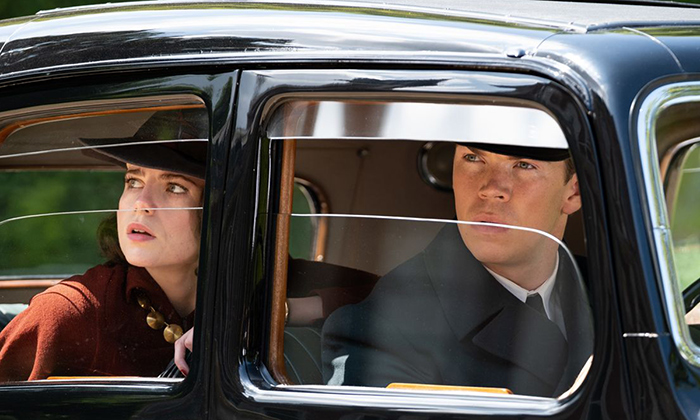 |
| Frankie does most of the pulling, and Bobby most of the getting pulled. They make a great team. |
Agatha Christie is known for weaving impressive and un-guessable mysteries, but the more I read and watch of her stories, the more I think it's her characters that are the most vital. Why Didn't They Ask Evans? isn't her most memorable work as far as mystery goes, but it still stands out, and is one of my favorites, even before this version came around. The simple intrigue of the central question and the duo of Frankie and Bobby are what make this story shine. Hugh Laurie understood that (he wrote and directed this, plus takes a small but key role), and he puts most of his focus on the two leads. Each of their scenes, even the ones that are just deducing and theorizing, are packed to the brim with wit and banter, great chemistry (thanks to the casting), and a grand sense of fun.
Laurie's adapting should have poor Kenneth Branagh turning green. For one, Laurie gets three hours to tell the story instead of a movie length, so he gets to indulge in the parts of the story that are the most fun. Mostly characters as previously mentioned, but also the cozy mystery tone. There's a beautiful balance of foreboding and building suspense mixed with light, airy, distinctly British wit and comedy. Every other scene has a line to laugh at, and there's obvious thought put into clever scene construction. The lost art of set-up and pay-off. Laurie also expands some parts of the book into more cinematic sequences that won me over easily despite my tendency to prefer direct adaptation. Laurie's writing and directing sensibilities complement Christie's work rather than conflict with it, and the result is, I daresay, enhancing.
 |
| I wish Christie had written more Bobby/Frankie stories so we could get more of Poulter and Boynton together. Totally adorable. |
The only hang-up here is that so much time is spent in fun, cozy sleuthing with the two adorable bantering leads that time runs out and the mystery plot seems rushed once it comes around to the dramatic ending. The dramatic ending doesn't culminate into a grand reveal like when Poirot gathers his suspects and explains everything succinctly. It's more given to us in bite-sized pieces that don't flow like the rest of the story does. Part of that is due to Christie's structure in the book, which isn't her best, but this adaptation deviates most toward the end and loses a little of the explanation she provided. A thread or two is left hanging, and the wrap up happens so fast I was left wishing for five more minutes to revel in the success.
I get the distinct feeling that the three-hour time limit came due, and Laurie had to choose between wrap up and explanation scenes, and some of those gloriously witty character scenes in the beginning and middle. He chose the character scenes. And as far as I'm concerned, he chose wisely. I'm completely in love with Will Poulter, Lucy Boynton, and this charming little mystery.


